



For almost all of my life, I can’t remember a single day when I didn’t want to die.
Some people might think this is a strange thing to admit openly. To the few people I have said this to out loud, they seemed shocked when I told them.
To me, though, what’s strange is that more people don’t admit this openly or say it out loud.
Who hasn’t wanted to die? I am genuinely confused by this.
A few years ago, I was talking to a man a bit older than me about this concept, but only in very loose, generic terms, without revealing my own thoughts on the subject. We were just talking about suicide in general.
“I’ve never been suicidal,” he told me. “I can’t imagine that. I’ve never wanted to die.”
This really surprised me.
"Never?" I asked. “Not even once?” I almost didn’t believe him.
He paused for a second or two, thought about it, then said: “Nah. Never. Not even once.”
I have no idea what that’s like.
When I meet people who say things like this, I judge them harshly and think one of two things:
This person must live an unbelievably privileged life.
This person must be a complete idiot.
The older I get, the more I believe that they’re both true, but I tend to give more weight to the second one. People who have never wanted to die—who have never contemplated suicide—must surely be fools.
They have to be.
Do they not live in pain? Have they not seen what happens in the world?
They must be supremely ignorant to either not know that the world is filled with war, famine, and pestilence, that life is indeed “Nasty, brutish, and short,” or, maybe, they know all of this and don’t care, which is far worse.
Sometimes, I hear people talk about being optimistic despite all the bad going on in the world. “Just turn off the news,” they say.
To a certain extent, I agree with that.
Yes, for the most part, the bad things happening over there really don’t affect us personally, do they?
Yes, we can just turn off the TV and ignore the collective misery of the people who don’t have the good fortune of just blocking it out and “choosing to be optimistic.”
But even so, I wonder, what about here and now?
When I look at my own life, my conclusion is: even locally, in my own town, and in my own experience, the world is still a terrible place, filled with mean people and bullies who want to hurt me, take advantage of me, and use me to get what they want.
It’s always been that way.
Is that not everyone else’s experience? Do other people know something different? How? What must that be like?
Life is incredibly painful.
What’s worse—and what may be unclear to those who aren’t paying attention—we didn’t ask to be born, yet we’re responsible for everything we do, and the actions we take will leave ripples across the rest of eternity.
I agree with Jean-Paul Sartre: man is condemned to be free.
How is that not utterly terrifying?
Several years ago, a woman in my extended family died by suicide. Her life was painful for me to watch from a distance, but was far more painful to her immediate friends and family members who better than I did.
When I found out that she had made the decision to end her life, I was very sad.
But I was not surprised.
I’m not surprised when anyone makes that decision. What’s more surprising to me is that more people choose not to end their lives.
When I told a man I knew about her death how I was going to her funeral, and he said something fascinating that still haunts me, a little bit.
“I’ve never really understood mental illness,” he said.
What?
I was shocked. That seemed like a non-sequitur.
I never said she had a mental illness.
Where did he get that idea? Why did he make that assumption? What does mental illness have to do with suicide?
Certainly, death by suicide and mental illness can be correlated. But suicide is not caused by mental illness. His assumption that it was felt almost insulting.
When I lived in Colorado, I took a tour of our local morgue. It was absolutely fascinating. I learned all kinds of things, including how autopsies work and the shocking fact that all the deceased are drug-tested, no matter the cause of death.
During a Q&A session with our coroner, I asked him about suicides and how and why people choose to end their lives. His response (paraphrased here, to the best of my memory) was extremely illuminating:
Men and women both commit suicide, of course, but for different reasons.
With women, a lot of times, there are usually underlying causes, and multiple false alarms where they have “suicide attempts” that they aren’t really serious about and they hope to get caught because they don’t really want to end their lives. It’s really just a cry for help.
With men, it’s different, though. Sometimes, with young men, especially teenage boys, a suicide seems like it comes out of nowhere.
Parents often tell me: ‘But he seemed so happy! We thought everything was fine.’ Then I tell them, ‘Well, maybe everything was fine. But then, one night, something bad happened, and he made a rash decision.’ Oftentimes, this is associated with drugs or alcohol, and they’ll make a bad judgment call, and it’s all over.
I thought this was fascinating because it pushed back against the narrative that someone can’t both have a “happy” life and also want to end their lives.
This is true in my experience as well, both as an observer and for me personally.
When I worked in hospitality, for example, I had a coworker who got angry that his girlfriend was “cheating” on him, and, in his anger, he got raging drunk, broke into a friend's house, stole his gun, and shot himself in the head.
Nobody saw that coming.
When I heard about it afterward, I couldn’t even believe it. I was so stunned I had to excuse myself and go hide in a dark hallway. I tried not to vomit or hyperventilate as my brain tried to process this insane news I’d just heard but seemed impossible.
It was so outrageous, so foolish, so stupid, so short-sighted, and such an unbelievable overreaction to what, in the long run, was a very, very small problem.
He was just a kid! He was only 17. He could barely even drive a car.
How on earth could a child like this end his life before it had even started?
I can’t say definitively because:
I’m not him.
He never told me.
I don’t ever, ever, EVER make rash decisions like this.
I’m the opposite of impulsive: I take forever to make decisions—so long that it makes most people I know mad. They actually get angry with me and sometimes literally yell at me because of it.
But aside from all that, the fact that a young man was bopping along in life successfully, seemingly happily, yet he all of a sudden decides to end his life for no apparent reason (or for a very stupid reason) is actually par for the course. It’s surprisingly common.
For me, though, I’ve never had a rash thought like that before… it’s always been more of a slow burn.
I’d be better off dead. My life would be better if it were over. My friends and family would be better off without me. It would be an easy way out for me to just end my life.
That narrative has filled my head from the earliest days. I don’t know any other way. I can’t remember not thinking that.
Sometimes, it loomed with a heavy presence that was very dark and oppressive, like a gray cloud that not only obscured the sunshine but also filled the air with a thick fog that constricted my lungs and made it hard to breathe.
Sometimes, it was a still small voice in the background. Hiding, but always present. It was never not there.
Sometimes, I have indeed been almost at the brink of ending it all, completely alone, utterly hopeless, and fully consumed with the thought that life is not worth living and it’s time to go.
Waking up with a painful life, with little hope and no light at the end of the tunnel, it’s just so hard to imagine why life is worth living.
If you can, why not just make it all stop?
By the way, in case anyone wonders, yes, I am familiar with suicide prevention and understanding the root causes and all that. I even took a class on suicide prevention and got a certification and learned about how to identify suicidal ideation and suicide-vulnerable people, and was taught how to speak to them, what questions to ask, (and what not to), and what to say (and what not to).
But none of that helped me.
I’ve heard it all before, and it doesn’t change much.
I imagine it’s like a medical doctor who gets addicted to opiates.
Of course, he knows the dangers.
Of course, he knows the reasons not to start using opiates in the first place.
But of course, in the moment, when it matters most, all of that head knowledge means absolutely nothing.
I had a head full of knowledge about how suicide hurts people, why killing yourself doesn’t end the pain, and how it’s a permanent solution to a temporary problem; just think of the people who are counting on you, blah, blah, blah, blah, blah…
I know all of that. Duh.
For years, I’ve written about the suicides of people I know that have affected me personally: by my latest count, I know at least eight people who died by suicide.
I’m affected, to a certain extent, by each one of them.
And I know that it was the wrong choice in every single one of those cases. But all that head knowledge means nothing. It didn’t make any difference to me.
When my family moved from Southern Colorado to Northern Colorado so my wife could finish her degree, that was the worst season of my adult life.
It was far worse than anything I could have imagined up until that point. Everything spiraled out of control: I was laid off from two companies in a row, I couldn’t find a job to save my life (literally, heh), my kids were making awful choices that were causing me tremendous stress, there were some legal issues, and a lot more I don’t want to get into just now.
In that season, I spoke to police officers, social workers, attorneys, counselors, therapists, and a psychologist. Each day was darker than the day before.
Then, my wife and I both graduated from college.
Then, the COVID pandemic hit.
Then, we moved to Arizona.
Then, my brother died.
What was supposed to be a better situation only got worse.
Everything got worse, not better, in almost every way, by every measure.
Every year—every month, it seemed—life was harder than before.
I reached a breaking point that involved a panic and/or anxiety attack that landed me in an emergency room. Medical bills piled up. We moved again to another part of the state, starting over now for the third time in a row.
Just getting out of bed seemed impossible, and that still small voice, that evil small voice that was always there in the background, which started as a whisper, became a yell.
I can end it. This can be over. Only I am choosing to prolong the misery. There is an easy way out.
For months, that lurked in the background. The lull of the siren’s song, calling me to end it all by crashing my ship on the rocks, was almost too much to resist.
I can make it stop now. It’s up to me. Nobody else has to know.
Then, out of the blue—literally out of the blue—that all changed.
I got in my car one afternoon and took my iPad with me, driving around to nowhere in particular with no destination in mind and no agenda.
I drove around town aimlessly. I saw a park and decided to stop for a bit. I took some pictures of the interior and exterior of my car since I had decided to sell it and the park looked like it would make a nice backdrop.
I snapped photos of the front, the back, the driver seat, the passenger seat, and the back bench, with the park in the background. Then, I walked over to a picnic bench and sat down and started writing some notes on my iPad.
And on September 3, 2023, at 6:00 pm, I looked up into the sky, saw the clouds float by, and watched the sunset. And for the first time ever, I decided to live.
I decided to say “no” to dying. To say “no” to suicide. To say “no” to ending my life. Whatever you want to call it, it was over.
Forever.
I would like to say, “It was just that simple.”
But it wasn’t simple at all. It took all those cumulative moments of my life before, all 13,890 days (or 38 years and 11 days) to make that decision.

When the time came, it was very easy. But I couldn’t make that choice until I was ready. I wasn’t ready for it before.
For whatever reason, it was a week and a half after my 38th birthday, and despite all the pain, confusion, dysfunction, and difficulty of the life I was living, I decided that death no longer had a hold on me.
Suicide was no longer attractive. It couldn’t control me anymore. No longer would it always be there, ever lurking in the background, calling to me: “If it ever gets too hard… I’m always here.”
No.
Death, to me, is now dead. …at least if I have anything to do with it.
And while I’d love to say: “Then everything changed after that! My life got better! My finances got better! My marriage got better! Now, my children prance about the house, twirling and dancing and singing my praises,” but none of that is true.
In fact, it got worse.
I had recently been diagnosed with autism1 earlier that summer, but the full weight of that hadn’t set in yet. Hardly. My family and I were just barely scratching the surface of what that meant.
Then I went to the emergency room—again—this time for a painful mass, where, after meeting with many doctors, I was finally told: “Well, it’s either cancer or an infection of some sort.”
CANCER?!
…and right after that, my wife was diagnosed with a chronic disease that has no cure.
…and my wife and I began the hardest season yet of our entire 18 years of marriage.
…and we’re still fighting with our teenagers over their life choices.
…and I’m still trying to climb out of debt acquired during the pandemic.
…and there are lots of other mundane, tedious, boring things that are hard for me but not worth sharing here.
Yet, unlike in the past, I’m steadfast in the decision I made at that random park on that random September afternoon.
There is no longer a dark voice wooing me from the abyss, tempting me to come join the hordes who have found a permanent solution to a temporary problem, including several friends of mine.
I won’t do it.
I can’t.
I’m not interested in it anymore.
The biggest surprise throughout all of this was that I thought that my life would get easier when I chose to live.
But it didn’t. It got harder.
I imagine it’s like an alcoholic who, during recovery, has to face his problems directly, sober for the first time ever. And that’s painful. Very painful.
It’s almost too painful to endure, which is why people become addicts or alcoholics in the first place. It’s too hard to cope with the shit life throws at you alone (or that’s what they tell themselves), so they need help and that’s how they find drugs or alcohol.
I understand this, at least in my own way. As far as I can tell, I’m not an addict or an alcoholic. But the way I secretly held on to suicide as a “final option” was definitely addict-like behavior.
Now, I have no other option anymore. There’s no more “Plan B.” Taking the easy way out is completely off the table.

When I was a newly-married man, a man I knew who had a very important role in my life was diagnosed with terminal cancer. He was my mentor and a man I had bible studies with on a weekly basis. I went to him for spiritual advice, marital advice, and parenting advice.
He was a strong, powerful presence and a huge influence on me. A big, very tough man: a Marine who fought in Viet Nam and saw unbelievable things he didn’t want to tell me, and I didn’t ask about, because I knew how horrific they were.
When he was dying, I was afraid to go visit him. The cancer was extremely aggressive, and he deteriorated unbelievably quickly. At one point, I asked his son how he was doing, and he said something that shocked me to my core and made me shudder.
“He’s not doing well, Ron. He was in so much pain the other day that he begged me to go to his house and bring him his pistol so he could blow his brains out.”
“Wow,” I said, completely unsure of how to respond.
“Was he joking?” I nearly gasped.
“I don’t know,” he said. “I think he was serious.”
“What did you tell him?” I asked.
“I told him, ‘Dad, you know I can’t do that.’” He said.
“What did he say?” I wondered.
“He said: ‘I understand. I know you can’t do that. But still, I wish you would…’ and his voice trailed off.”
I was speechless.
I couldn’t imagine my own father asking me to sneak him a gun when the nurses weren’t watching so he could kill himself. More than that, I can’t imagine what it must be like to have to tell your own father “no” to a question like that.
I can imagine, though, at least a tiny bit, what it was like for my friend’s father to want to end his suffering. It was an agonizingly painful death, and it made me cry when I went to visit him for the last time on his deathbed.
One of the most amazing stories I’ve ever read in my life is Henri Charrière’s book Papillon, which is the alleged account of his life as a prisoner at Devil’s Island, the prison camp in French Guiana, and his successful escape.
While it isn’t surprising that some of the story is obviously embellished and isn’t entirely accurate, the movie with Steve McQueen and Dustin Hoffman has a few choice lines I think about frequently.
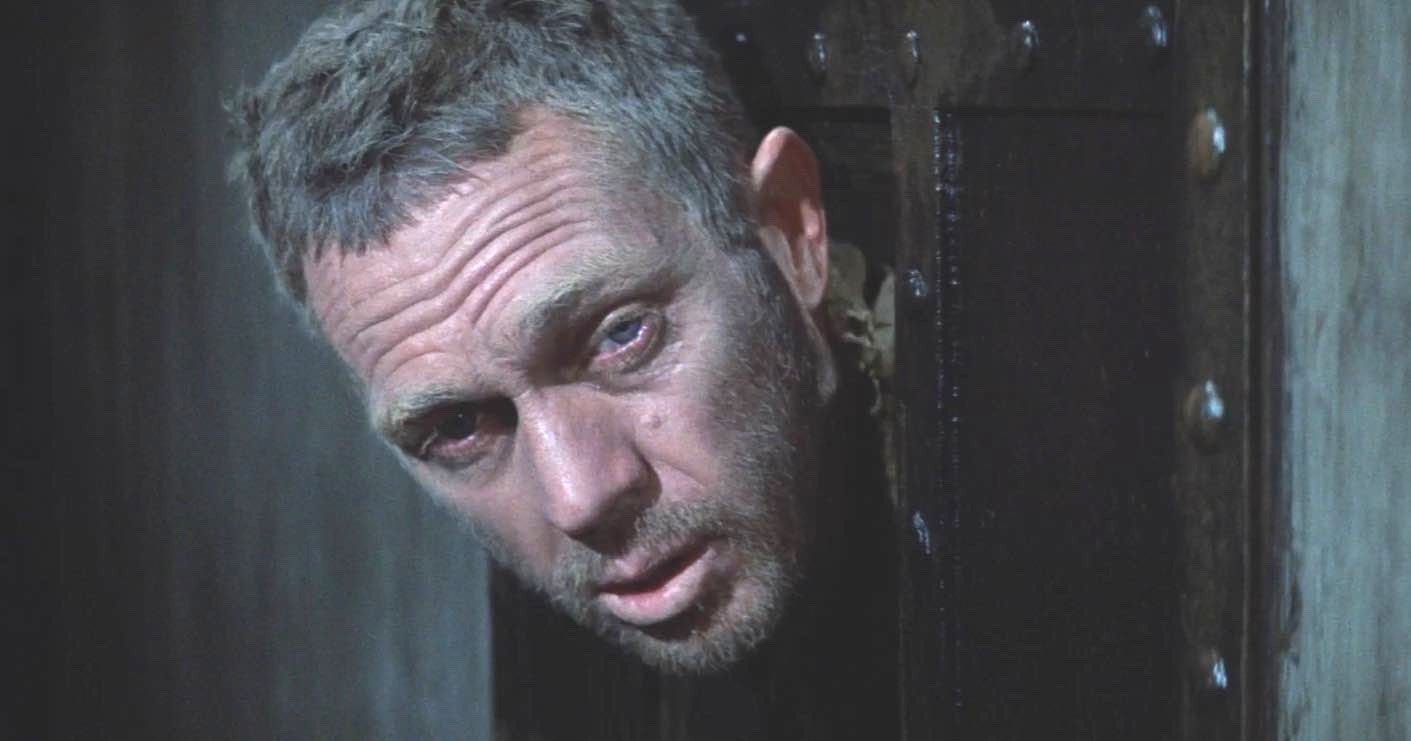
One quote in the film that McQueen says over and over is when the guards check on him from time to time, wondering if he’s alive or dead (probably hoping for the latter):
“I’M STILL HERE, YOU BASTARDS!”
Sometimes, he says it quietly to himself when he’s in solitary confinement.
Sometimes, he shouts it at the guards angrily so they can hear him and know they haven’t broken his spirit.
I’ve decided to use this as my own new mantra for my life.
“I’M STILL HERE, YOU BASTARDS!”
You’re not going to kill me.
I’m not going to kill myself.
I’m not going away.
I’m going to survive this.
I’m going to keep going.
I won’t stop.
And on September 3rd of each year, I’m going to celebrate the anniversary of choosing to live.
I wish it had been easier. It hasn’t.
But my conclusion is that wanting to die was easy. Deciding to live was much harder.
But it’s still worth it.
…and I’m still here, you bastards.
If you or someone you know is struggling or in crisis, help is available. Call or text 988 or chat at 988lifeline.org. Veterans, press 1 when calling.
As I’m discovering, people with autism and high IQ have a massively increased risk of suicide: up to six times more likely to have thoughts of suicide. In my case, this may or may not factor into all of this, but that’s all part of my process of discovery.