



When you think of contagious deadly diseases that spread quickly and kill lots of people, what comes to mind? Can you name a few off the top of your head?
Influenza? Bubonic plague? Zika virus? Scarlet fever?
Depending on how old you are, what you’ve seen in your own life, and what you’ve read in historical books, you’re surely familiar with these and perhaps many others.
What do you call it when one person catches a disease, who spreads it to another, who spreads it to another until it spreads completely out of control, leaving nothing but utter death and destruction in its wake?
An outbreak? A pandemic? An epidemic?
Yeah, something like that, and in that order. Depending on how big it is and how quickly it spirals out of control, we have names for these things, both for the specific diseases and the specific strains affecting the populace. And we also have names to describe the particular outbreaks themselves.
The Black Death. The Spanish Flu. SARS.
The bad news is that these kinds of illnesses often seem to pop up out of nowhere, often without warning and without preparation, and spread so quickly that they’re impossible to contain until it consumes an entire country, or even the whole world as we saw most recently with COVID.
The good news is that societies, governments, and international organizations have developed a way to inoculate people against diseases, contain them, and respond to them quickly to prevent further death and destruction, usually before it becomes a global crisis.
We have centers for disease control and branches of government like the United States Public Health Service to stop infections from spreading and to immunize the population from further infection, as well as study the disease in a laboratory to determine its origins and makeup, and find out how to prevent the spread of something so devastating from happening again.
But I struggle to understand how an entire coordinated global response can be rapidly mobilized when a disease spreads from one person to another, and then one group to another, and then one country to another when it’s a virus or bacterium…
…and yet be so utterly helpless at identifying ideas, habits, and behaviors that can be just as destructive to a civilization, country, or society, and stop their spread.
The Fertility Crisis as Symptom
Now, the “global fertility crisis” is such a tired, boring topic by now, I won’t waste time by writing almost anything about it here. Just pretend there are two charts below:
A line chart showing the massive downward spike in the fertility of essentially all Western nations, and
A population pyramid showing an extremely top-heavy demographic in a country that looks like an inverted triangle
By now, you’ve likely seen these so many times that I don’t even need to show them. You can picture them instantly just by thinking of them—I could pick almost any nation in the Western world at random and pull up a fertility chart and a population pyramid and they would essentially look the same and even seem redundant here.
Everybody knows that Western nations are now below or even far below replacement rate, which appears to be sending them spiraling into catastrophic population decline, and will, in turn, decimate most of the social safety net and infrastructure that has been built up over the past century or so.
That really isn’t up for debate. It’s been on a slow decline for decades.
Like a swimmer who wades out into the ocean will find it pleasant for a while, standing on the continental shelf which slowly gets deeper and deeper until it eventually drops off into a terrifying abyss of the deep, dark, endless ocean.
But everybody recreating at a local swim beach knows that you don’t go too far from the sand because eventually you’ll drown in a horrifying nightmare of dark water.
So what is wrong with our world today that we’re pretending we don’t know how to avoid the terrifying abyss of civilizational decline? Why did we stop happily sunbathing and playing with sand castles where it’s safe and sound close to the shore?
For whatever reason, it’s clearly because people stopped believing in the things that kept us safe in the first place: the lifeguard towers, the nurses station, the well-lit parking lot with security guards, changing rooms and showers.
Those things, of course, are metaphorically referring to the safety and security of social institutions like church, community, marriage, parenthood (and procreation in general).
Why Marriage Fell Out of Favor
But why?
As somebody who recently celebrated his 21st wedding anniversary, I have constantly asked myself why it seems people my age and even a bit older than me seem to despise the idea of marriage in general. Over the years, this has absolutely befuddled me.
Not because I can’t understand why a purely selfish heathen would want to get drunk, get high, fornicate promiscuously and go on an insane journey across the globe sowing his (or her) “wild oats” — I’m human too, so of course I understand that.
Plus, sin is fun.
So that doesn’t surprise me.
But what does surprise me is how the people who do all these things then don’t end up settling down, and if not seeing the error of their ways, at least acknowledging that the time for that lifestyle (or lack thereof) eventually comes to an end, where they eventually enter into the common grace of social institutions like marriage, family, community, etc.
It seems like that doesn’t happen anymore.
I used to feel like I was in the minority of people who have only slept with one person. Many others my age (men especially), seemed to have wild, insane sexual adventures and then eventually decide to stay with one woman for the rest of their lives.
But that doesn’t even seem to be a constant anymore.
In fact, it seems like the opposite is now true, especially for women: regardless of their own physical past, it seems more and more women these days decide they don’t like being “settled down” with one man for the rest of their lives, and they instead flip the order and go from a monogamous, loving marriage to a wild, adulterous spree, entering into a kind of reverse-puberty, aging backward.
This puzzled me for years.
Discovering the Superspreader Event
Then, in 2021, I read a book called Eat, Pray, Love. That’s where I discovered the source of a new kind of infection that spread a gigantic social infection (if not creating it outright).
To use Covid-era terminology, if Elizabeth Gilbert’s mind wasn’t the wet market itself where the disease originated, the publishing of her book in 2006 was certainly a superspreader event.
While trying to survive the doldrums of Covid-era depression in 2020, I started writing a memoir of my own life. Growing up as one of nine children in an extremely conservative, homeschooled family of Mennonite heritage and being an outcast in every social circle I’d ever been a part of made for interesting material, I thought.
As I dumped over a quarter of a million words onto pages that have yet to see the light of day, I also began collecting as many books as I could that seemed to be influential, well-regarded and interesting biographies and Gilbert’s book was one of many.
“Good writers are good readers” is a motto I firmly believe in, so I added many to the pile: stories by men, women, old people, young people, parents, children, and more—I wanted a diverse diet to help understand how to craft a compelling narrative that fit my own story.
My wife was positively shocked, though, when she found out I was listening to Eat, Pray, Love on audiobook, and she said something to the effect of:
“Uhh, why are you reading that?!” and
“That’s a woman’s book,” and
“How are you just now discovering this? It came out a really long time ago.”
Never one to rush into pop culture fads or follow the latest thing, it didn’t bother me in the slightest that it was at least 14 years old at that point.
I had seen it about a bazillion times on bookstore shelves, usually standing upright on a little white wire rack on a pile of stacked books, close to the front door, in a section titled “bestsellers.”
I didn’t really care about that, but what I did care about was how some woman I’d never heard of before seemed to capture the imagination of millions of women all over the country, if not the world.
What could I learn from her?
A lot, as it turned out.
To make a long story short, I learned that Gilbert is an excellent writer.
She’s also a horrible human being.
Well, perhaps I’m being too harsh. It’s not really my place to judge whether people are horrible or not. Perhaps she’s just a broken person trying to make sense of life like the rest of us.
But her story is a horrible story. For those who haven’t read it, or for those who have but have forgotten because it’s been so long, she essentially seems to be the one responsible for romanticizing the idea that, if you are a married woman in her 30s, 40s or 50s, and if you truly want to be happy, you should:
Divorce your husband, get on an airplane, fly to Europe, drink lots of wine, eat lots of food, and fall madly in lust in a spastic, psychotic, spontaneous, co-dependent sexual relationship with a man much younger than you.
Break that off, get on another airplane, fly to another country, preferably one with a culture of Eastern mysticism. Take drugs, “pursue spirituality,” and focus solely on yourself for an entire year.
Get on another plane, fly to a tropical island location, and fall madly in lust in a spastic, psychotic, spontaneous, co-dependent sexual relationship with a man, this time, much older than you.
Problem solved.
You’ve eaten, you’ve prayed, you’ve loved.
See? You’re happy now! What a fulfilling life you have.
They even made a movie out of it!
What Happened Next
Now, I hated that premise of the book, and I hated the toxic way that it was very clear that this woman inspired many, perhaps thousands, perhaps even millions of women to aspire to do the same, or at least wonder if they would truly be happier if they had followed the “Gilbert Plan” for their lives, or at least the second half of their lives.
But the strangest part of all was not what happened in this book of a morally abhorrent divorcée pursuing hedonistic pleasure like a rock star for a decade or so… but what came afterward.
Does anybody who read (or watched) Eat, Pray, Love know what happened next?
I kid you not—the pages of the unwritten next chapter of her life included:
Get married a second time to a new man, after you decide that maybe being married isn’t so awful after all.
Divorce him, too.
Enter into a spastic, psychotic, spontaneous, co-dependent, sexual relationship with a woman, this time, who was formerly your best friend.
Purchase, consume, and share alcohol, marijuana, Xanax, Ambien, mushrooms, MDMA, and cocaine with your new same-sex lover, enabling her drug use.
Plan to murder her (and come very close), then kick her out of your home, making her a homeless drug addict.
Watch your best-friend/lover/ex-lover die of cancer.
Claim to hear her dead spirit communicate directly with your mind from beyond the grave.
Enter a 12-step program for sex and love addiction.
This is all literally true… she admits to all of it, including the intent to murder!
How’s that for a happy ending?!
What a rotten person.
What a rotten book.
What a rotten story.
What a rotten lie that many, many people have fallen for.
Of course they don’t tell you the end. Nobody is willing to tell you that these hedonistic lies of spending every waking moment pursuing your own selfish pleasure end in pain, suffering, and even death.
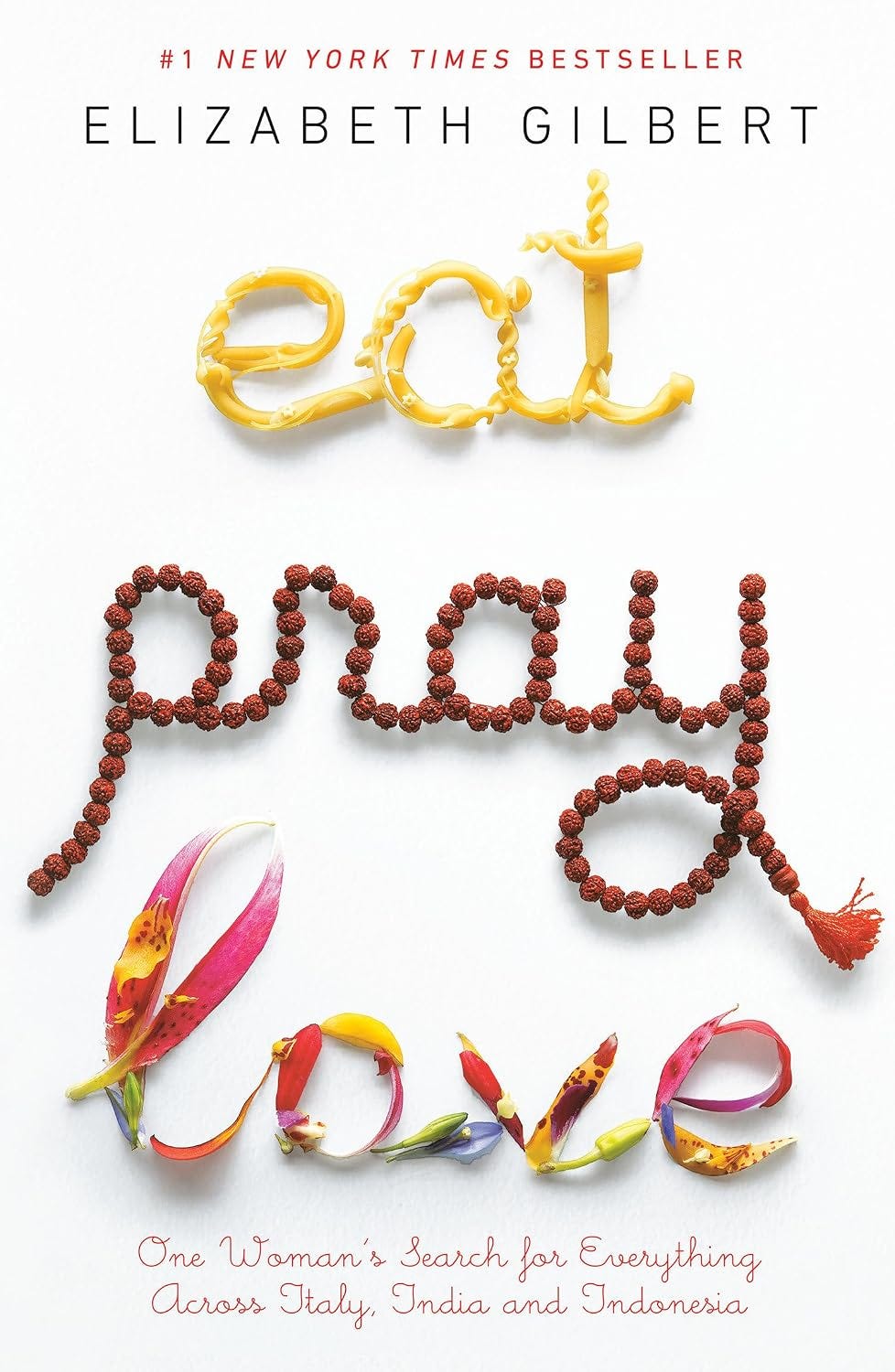
Telling the truth like this doesn’t sell books. You likely won’t see that book in the little wire stand on top of the best-selling pile by the front door.
This sad lie is the infection that is killing us in the 21st century.
And again, whether Gilbert herself was patient zero, I don’t know. And it’s really unimportant because she clearly inspired a whole genre of authors that followed.
Her book spawned a whole new generation of wannabes writing even worse stories about their even worse lives.
After I read a few more of these and listened to them on audiobook, I decided to give up and move on: no matter how good these writers are, so many of them are romanticizing an ideal of an extremely broken, dysfunctional life that it’s depressing.
The worst of all of them, was Wild, by Cheryl Strayed, who, among the very many sins she openly celebrates (including adultery and abortion), even ate her dead mother’s cremated remains while “searching for herself” hiking the Pacific Crest Trail.
Ugh.
That’s the kind of book you throw in the garbage can and don’t finish.
And yet… the downstream effects of these books can be readily felt. In the years since I discovered Eat, Pray, Love, I have met so many women affected by the sort of mind virus that these kinds of stories produce. It’s thoroughly depressing.
The Antidote
I didn’t even have a concept for this sort of book as a genre or know that it had a name until I saw a video the other day by a female author who wrote what was essentially the opposite of Eat, Pray, Love.
Domestic Extremist was a book released in 2023, and I eagerly devoured both the hardcover book and audiobook as soon as they came out.
In contrast to the perpetually-adolescent, never-satisfied, childless, wandering addict, and almost-murderer Gilbert, “Peachy Keenan” wrote a book that shares the solution to the ills caused by (or at least promoted by) Gilbert’s book.
Keenan is a (pseudonymous) mother of five, and traditional Catholic who has remained married to the same man for 23 years, and who, by all accounts, has lived a far more satisfying life in service to others.
This woman has found joy.
This woman has found wisdom.
This woman has actually found herself!
She has a life worth living, and she has created an example worth following. …and I don’t even know her real name!
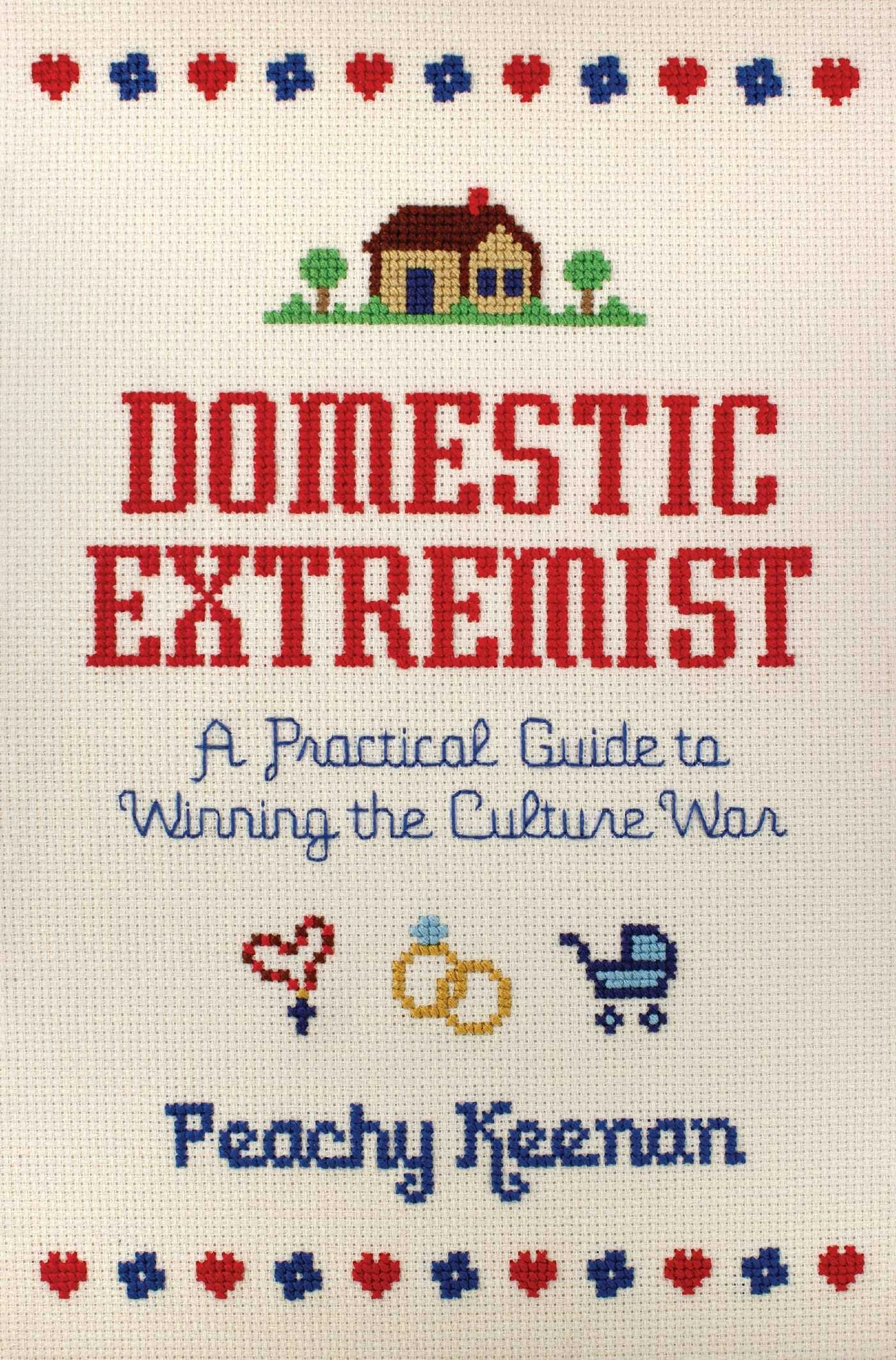
She’s the one who finally put words to what I’ve felt since reading Eat, Pray, Love, and gave it a name: “divorce porn.”
Bingo! That is precisely it!
In this video interview accompanying the release of her newest book Supervillains, she describes one of the real supervillains in America today. Not a person, but an idea pushed by “Female Liberation Theologists” just like Gilbert.
If you’re inclined, watch as she describes this to podcaster and comedienne Bridget Phetasy (who, FYI, is no social conservative herself, but rather a former heroin addict, a sex and dating columnist, and a writer for Playboy.)
(Note: transcript below is lightly edited for clarity and brevity.)
Bridget Phetasy: Of all the villains in your book, is there anyone who’s the worst for you?
Peachy Keenan: I have the big ones in there, Anthony Fauci and Alejandro Mayorkas and a lot of the Hollywood super villains, who ruined Disney live-action princess movies, for example.
But there’s actually a category that I felt has been the most damaging to me and makes me most afraid for the future, and that is—there’s not really a famous name—the female liberation theologists.
This is what I was thinking about when the Lindsay Clancy stuff happened. I was like, “Holy shit, this is them!” These are the female liberation theologists that—they write these books that I call “divorce porn,” where, basically, their message is:
“Your husband, your nice, normal, boring husband, he is the problem. He is holding you back, girl. Those kids you have, they—that is an anchor on your ass. You need to grow your wings and fly away.”
And they’re writing books about “Live, laugh, love,” about how their lives changed for the better when they ditched their kind of normal, traditional family life. And you walk into a bookstore and you’ll see—I’m sure you’ve seen—piles of these books.
They’re always writing articles in The New York Times about “I got divorced, and I went on my sexual exploration journey at age 62, and I got crabs, but it was worth it!”
Bridget Phetasy: You’re like, “You have kids!”
Peachy Keenan: Yeah… they could read this! What are you doing?!
But they’re promising this shimmering lifestyle, and if you just could get rid of your optional marriage—you don’t need that, you don’t need that anymore. We’ve—we’re evolved beyond that.
And that I felt like was a little bit at play in the Clancy trial, like the celebration of a woman who—“It’s all your fault that she was just… forced to do what she did and she’s not to blame, and she had some major issues, but the main issue was you, Mr. Clancy! You were the issue!”
And that was just stunning to me to see the… swirl around her as… an icon.
Because I don’t think that case represented really anything. I don’t think there’s really any politics to it. It’s a horrible tragedy. She was on all these medications. Who knows? I don’t know what was going on in her brain. Was she crazy? Something was wrong with her.
But to turn it into this sort of political movement was so weird to me, this like feminist [movement]… Bridget, imagine—if instead of Lindsay Clancy—imagine Sydney Sweeney one day strangles her three kids. What will those women do? She’s going to the electric chair!
Bridget Phetasy: Yeah, they would turn on her.
[—skipping ahead a bit—]
Bridget Phetasy: There’s this genre of video on Instagram. I don’t go on Instagram that often, but when I do, I get sucked into a short-form content current, and one of them that I get sucked into often is the women who change their body after they get divorced. And a lot of times it’s AI. It’s not even a real woman.
It’s just “Me before I left this guy who was holding me down. And then now I’m like a supermodel now that I left my husband.” It’s like, maybe your marriage wouldn’t have fallen apart if you had been a supermodel when you were with him and not like a fat slob.
Peachy Keenan: Yeah, that’s the divorce porn. Exactly.
Bridget Phetasy: It’s crazy.
Peachy Keenan: And you read what happens to the women after they leave the husband, and it’s often not better. Okay?
Now, I’m not saying stay with any husband. Of course, there’s certain situations that are… Yeah, I get it. My mother had to divorce my dad for… reasons, and I support that. But, overall, it’s usually not better. The grass is usually not greener. It’s usually a total nightmare.
Bridget Phetasy: I feel like Glennon—what’s her name—Glennon Doyle? Is she one of the ones who was very early to this trend? She had a mommy blog, and then she wrote a book, but then she became a lesbian and left her husband… like cheated on her husband, became a lesbian—her whole evolution has been exactly this. And she’s made a lot of money on it actually.
[—skipping ahead a bit—]
Peachy Keenan: The woman who wrote… Eat, Pray, Love.
Bridget Phetasy: Oh, I hate that book.
Peachy Keenan: Do you know what happened to her?
Bridget Phetasy: No.
Peachy Keenan: She wrote this book about leaving her husband, traveling the world. Julia Roberts played her in the movie, Eat, Pray, Love.
What happened to her was she, just like you would predict, she became a lesbian. She started dating her butch dyke Latina hairdresser—became her girlfriend… then tried to kill her! Attempted murder! And they were both drug addicts.
[—skipping ahead a bit—]
Bridget Phetasy: She was like a normie lib-woman in New York City. I remember reading the book and being infuriated that she got paid to travel and write this book… Elizabeth Gilbert, right?
Peachy Keenan: Yeah. She made all this money, huge advances. She had the life. Julia Roberts got to play her. And it ended in a train wreck, and it’s actually, it’s unbelievable to read it. Now she has a shaved head, and she’s all repentant and lives alone with her cat in New York.
Bridget Phetasy: Oh, wow.
Peachy Keenan: Post-drug abuse, post-girlfriend, post-murder—try[ing] to kill her, try[ing] to overdose her with their pills… sordid, and… sad.
Bridget Phetasy: What? Holy shit.
Peachy Keenan: But yeah, that’s what the female liberation theology is—it’s just like a cult. It’s all bullshit for the most part.
This is the best explanation I’ve heard for what is contributing to the decline of American morals, the decline in our population and huge demographic change.
This divorce porn is an insidious evil hiding in plain sight. I’m glad Peachy Keenan has the eyes to see, the ears to hear, and the mouth to describe what is going on.
If what they’re saying is true, Gilbert traveled all over the world doing and trying everything (and everyone), only to return back to where she started, losing a few marriages and her hair in the process.
This story is an absolute tragedy.
What I’m *Not* Saying
On a final note, I want to be very clear to make sure that people who like to jump to conclusions don’t read something I didn’t actually write.
I am not saying that being a “tradcath,” or that being married for two decades, or that being a parent of five is the secret to happiness, and that it’s just that simple.
Although I do have five kids and I have been married for over two decades (like her), I don’t agree with everything she says (or how she says it) and I’m not Catholic.
I am also not saying that being childless or single is pointless or bad.
I know several wonderful people who are either single, or married and childless, and that does not make them defective. (Plus, I was once single and childless myself!)
I am saying that our culture has pushed, with the full force of a gargantuan societal tidal wave, a narrative that says something like this:
Pursue pleasure at all costs.
Always put yourself first.
Always seek but never find.
Experiment whenever you can, in every way you can, with as many people as you can.
Put as many things as you want into your body.
Children are bad, and very expensive.
Marriage is a trap to be avoided.
If you do have children, you’ll regret it.
And if you are married… have you tried divorce?
This narrative is poison.
This narrative is a mind virus.
It kills, steals, and destroys.
…and it doesn’t even make people happy in the end.
It’s a sort of suicide pill for your soul: you take it and it slowly kills you, but it has just enough anesthetic that you don’t feel the pain for a long time—until after it’s too late.
Unfortunately, as even Substack shows, the “leave your husband” genre is hugely popular, and profitable.
I’m glad I now finally have the words to describe the poison that is being peddled to young people—especially women—today.
It’s very sad to see that this kind of prescription is so popular. It should be relegated to the daydreams of losers, not touted as a model to be eagerly followed.
The divorce porn epidemic is deadly and may turn out to be more devastating to Western civilization than any other so far. And it’s spreading like wildfire.
That is scary stuff. People don't believe you when you tell them we have too few people. I am in the 60's dating age group. Most are very anti-marriage. And some, just anti-man.
I would love to see someone follow up with 100 of these women who have been liberated from marriage and see how they are doing 3-4 years in.