


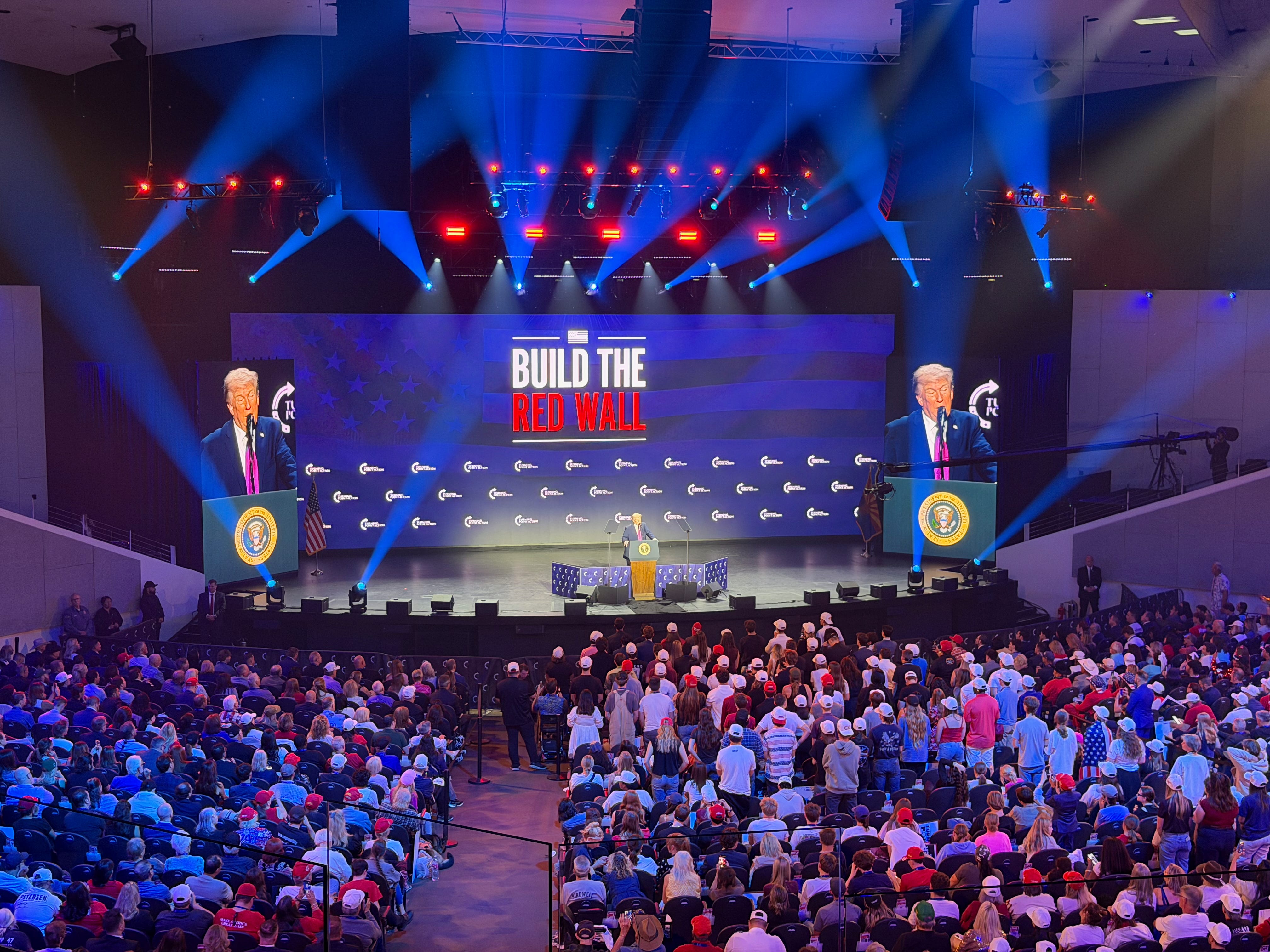
During the 2024 election season, I got a notice via email that former president (and future presidential hopeful) Donald Trump would be visiting Tucson, Arizona, where I live. I signed up for the event, and when the day came, I walked over from my office to see him speak.
But what actually happened that day was a total disaster.
I spent over two hours, in 100-degree summer weather, standing on hot cement with thousands of other people in a giant line that stretched over a half-mile, only to be told that even though I’d gotten a ticket ahead of time, and had been in line for hours, waiting exactly as I was told to do, there was no room in the venue after all.
Many of us (there were many more of us outside than inside) were turned away, since the Linda Ronstadt Music Hall was too full. So, despite being “registered,” none of us would get to see the president of the USA after all.
This frustrating experience wasted about three hours of my day during business hours, and it was a tremendously disorganized affair with horrible communication and even worse execution.
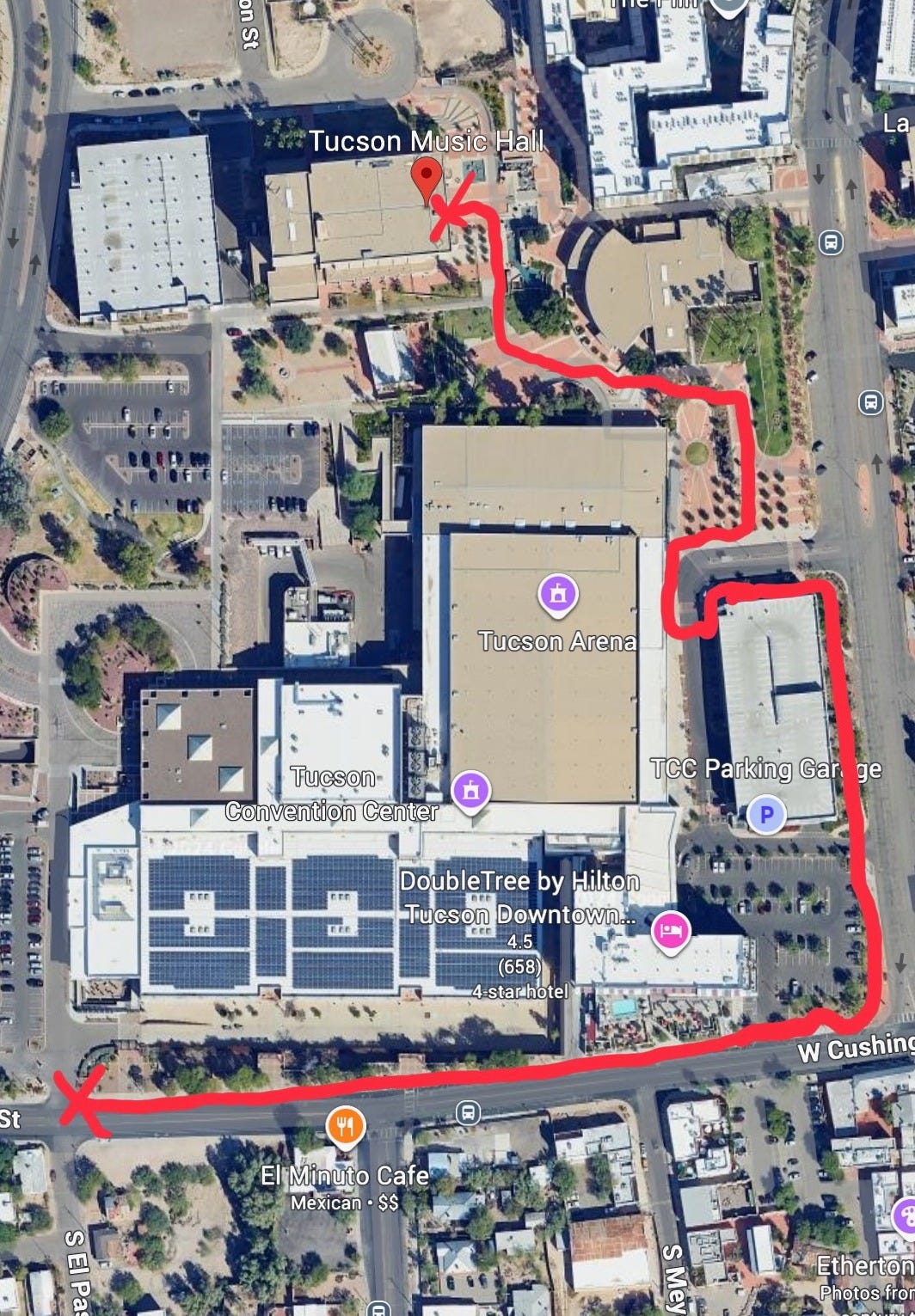
Nobody in line had any idea what was going on, when the venue would be full, and whether we’d be able to get in or not, even though they’d been there hours before the doors opened. It was just a lot of wishful thinking by people passing along rumors and hearsay with zero leadership or facts on the ground.
By the time the disappointed crowd finally dispersed, and we all realized we’d never even had a chance in the first place, I walked back to my office, gushing with sweat, chugging cold water, and very sunburnt (even though I brought an umbrella to keep the sun off). I had to sit on the floor in front of a box fan for half an hour to try to cool down.
I later heard that multiple people in line had fainted from heat exhaustion, falling over on the sidewalk, and were taken to the hospital.
But despite the chaos, the experience wasn’t a complete waste, for two reasons:
I consider being an active participant in America’s political process—in any fashion, no matter how small—worthwhile.
I learned how not to try to see an American president, and made copious notes about how I’d do it differently next time if I ever had the chance.
A few weeks ago, I had the chance again.
I got an email from Turning Point USA announcing an event called “Build the Red Wall” on Friday, April 17th, in Phoenix. I signed up immediately (within seconds), but this time, I also jumped into immediate action to make a bulletproof plan for going and actually getting in this time.


This time, didn’t want to be caught flat-footed. Unlike before, where it took me 10 minutes to walk a few blocks from my downtown office to the convention center, I would have to drive all the way up through Phoenix this time, and there was no way I’d do that without a guarantee of success.
Good news: I made it. But it took an insane amount of planning, logistics, and careful scheduling to pull it off.
For anybody who’s interested in what it’s like going to an event attended by an American president, here are my notes about how I pulled it off successfully, and what I learned this time around.
Step 1: Secure a location to stay the night before.
Before, when I tried to go to the event in Tucson, I was told that the doors would open at 11:00 am, and I walked over at 11:00 am. I figured there would be a line, but I had no idea how big that line would be.
When I arrived, I was gobsmacked by just how big the line was. I had no idea how popular this event was or how many people would show up.
After getting in line, I realized that if I had really wanted to get in, I needed to come several hours ahead of time and wait in line. That sounded awful, though: standing on the hard pavement in the sun for even more hours?
While I was in line, I heard that some of the people who made it into the event had camped on the ground the night before.
That was insane, I thought. I wouldn’t do that for anything. Not an iPhone release at Best Buy on Black Friday, not a year’s supply of Chick-fil-A when a new store opens… not even to see the President of the United States.
But I did realize I could hack this approach a little bit: if I were able to stay the night really close to where the event would be held, I could just walk over early the next morning.
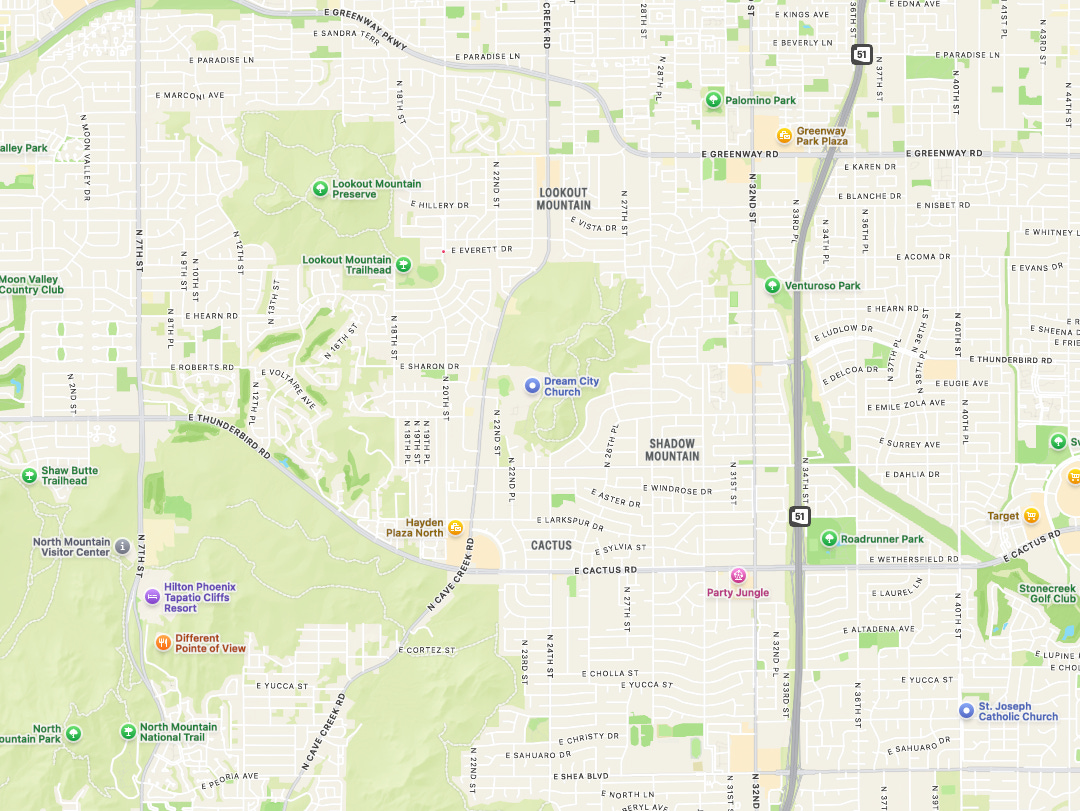
So that’s what I did in Phoenix. I booked an Airbnb within walking distance the night before, so I could just get up early and walk over. It worked.
One of the biggest problems with free, public events like this is just how chaotic the parking is. It fills us really fast, and the Secret Service has a whole complicated way of screening cars entering the parking lot, so they told us ahead of time to expect major delays if coming by car.
I decided that just by walking over in the morning, I could shortcut that entire process and not get stuck waiting in line in my car.
The hardest part about my plan, though, was that there were zero hotels anywhere within walking distance of the church where the event would be.
I did find one or two Airbnb options, but even that was harder than I expected. I booked a room at one place that was very close: about a ten-minute walk. “All set!” I thought. But then a day or two later, the host hadn’t responded to my request in time, so it expired.
Whoops. Back to square one.
I tried again, but there was only one Airbnb left.
The good news? I booked it, and the host accepted right away.
The bad news? This one was much further away, about a 40-minute walk.
Oh well.
Step 2: Get there and scope out your destination early
Phoenix is not very far from where I live, but it’s a giant metropolis filled with lots of confusing highways that are always under construction. Plus, the Airbnb I booked was right at the very top of Phoenix, which meant I had to drive all the way through the entire city, including the worst of Phoenix traffic, to get there.
Rather than going after work and risking getting caught in rush-hour traffic on I-10, I left Tucson early the day before: about 2:00 pm, hoping to get on the north side of town before the rush.
It took me two hours to go from Tucson and get to my destination via the long, meandering, pockmarked highways with traffic cones and detour signs everywhere.
It was a miserable drive, but I made it.
I checked into my Airbnb, met the host, and got acquainted with the place. I then got in my car and drove to the event venue during daylight so I could see what my walking route would be in the early morning hours when it was still dark.
This was a very helpful exercise.
I learned that the church was in the exact opposite direction of what I had originally thought, so learning that before I walked saved me time. Also, the sprawling campus was much, much larger than I expected, so it was helpful to see where the buildings and parking lots were, so I could plot my plan.
Step 3: Talk to people who have been there before, if at all possible
When I got to the church, I drove past what I assumed the entrance would be, then stopped on the side of the road by a guy selling Trump merch from his truck.
I got out and asked him a bunch of questions about what the next day would be like. He surprised me by pointing out where the real entrance would be—it was on a completely different street with much less visibility than the one I saw earlier.
I was really glad to discover this ahead of time, so I wouldn’t waste any time trying to get in via the wrong entrance or standing in line for no reason behind a bunch of people who were similarly confused by this.
There were several people selling Charlie Kirk shirts and hats, as well as flags, bumper stickers, and all kinds of other apparel related to Donald Trump. I talked to a few of them and asked them if they’d been to an event like this before.
They had. Not just an event like this, but an event like this at this exact venue a year or two before.
Jackpot!
They were very helpful in telling me what to expect, what the rules were, where the line started, what time to get there, and lots of other little, nuanced details. This was very helpful.
It’s always helpful to get insider information about how things actually go, rather than trying to learn everything on your own.
Step 4: Look over the official information the event organizers give you, but do NOT rely on it for accuracy
This was a surprising and confusing lesson.
When I first signed up for the event, the event organizers sent me a confirmation email, but also said I’d get another email with further details the night before the event. (Note: The same thing happened when I tried to go in 2024.)
It had lots of helpful details about what was and was not allowed into the event, what the Secret Service would be screening for, and more.
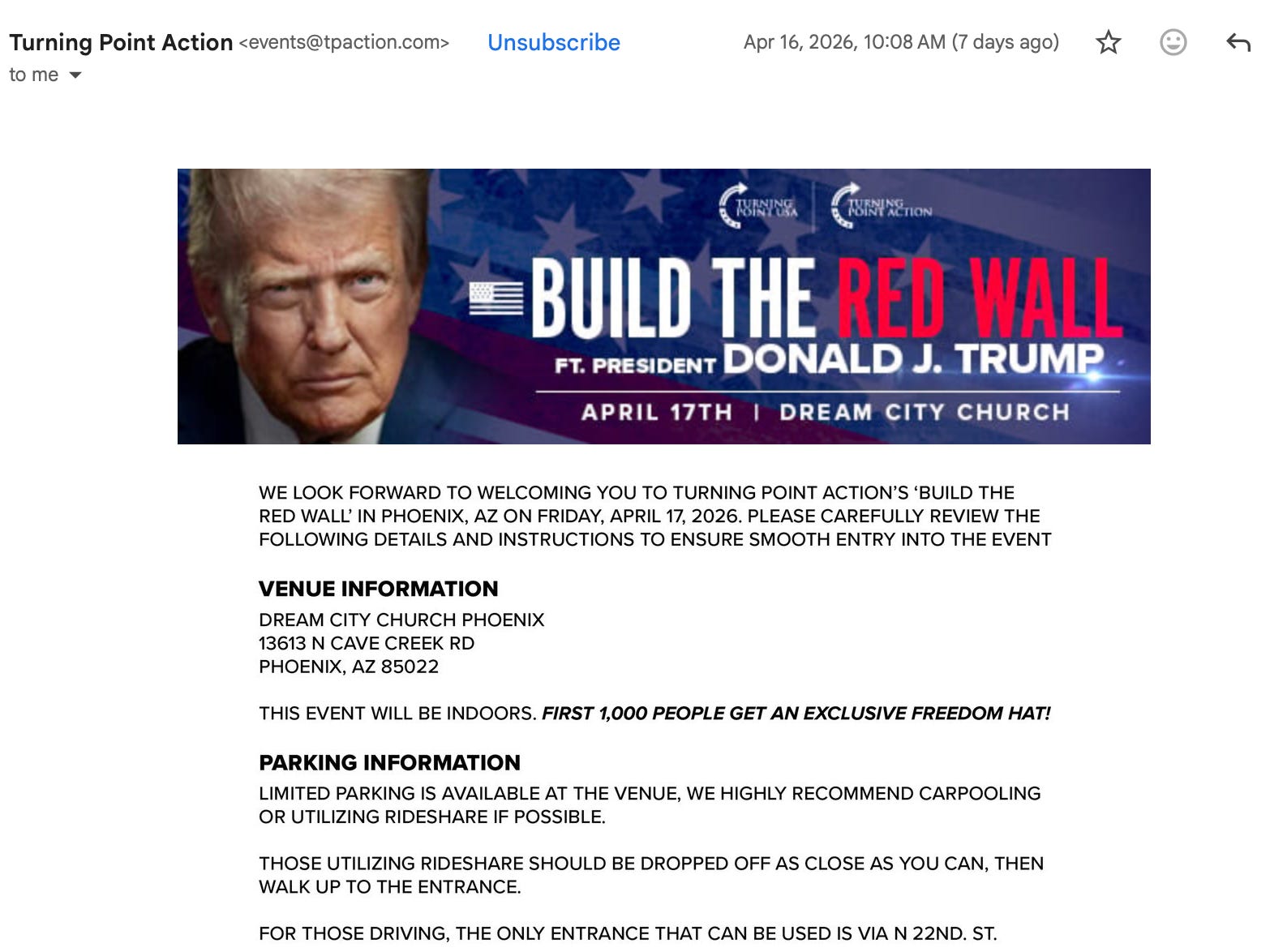
But the most confusing part was that not everything was true: the email said no water bottles would be allowed in. This was an extremely important detail, since Arizona is legendary for its harsh sun and intense heat.
Were they really saying we couldn’t bring water bottles to this event? What about when we stand in line? Did they mean no water bottles at all, or just when you get to security? What about the several hours of standing and waiting?
Also, if they didn’t allow water bottles, how would we stay hydrated? Would they provide water themselves?
The email and website didn’t address this at all.
Also, what about if I needed to go to the bathroom? If I got in line and then needed to take a bathroom break, would I lose my place in line? Were there even bathrooms nearby? Where?
None of the official instructions addressed this either. So I had to use my powers of deduction, gamble a little bit, and—most of all—try to remain flexible.
I figured the best I could do was not to drink any water that morning, but bring a cheap, plastic water bottle just in case. I tried to cover both bases: try not to need a bathroom while standing in line, and bring water in case they said “yes,” and only take very small sips, so I wouldn’t die from dehydration, but could also be ready to throw out the water bottle at any moment.
These tiny, tedious details were so confusing, and the hearsay was so conflicting that it really caused me a lot of anxiety. It was a bit like going backpacking in the wilderness. I spread out all my supplies in a pile on my bed at the Airbnb and asked myself:
“Which of these items would I regret NOT having with me if I turned out I could have them?”
-and-
“Which of these items would I regret having with me if I turned out I could not have them?”
It’s a Catch-22; you don’t want to show up and wish you had brought something you don’t have, but you also know there’s a possibility you might bring something and wish you hadn’t.
For example, in 2024, I saw the notice that said “no umbrellas allowed,” but I brought one anyway. The noontime sun in Tucson is so intense that I was afraid I’d get heat stroke. I just brought the oldest, crappiest umbrella I had, and decided I’d use it all the way to the door, and when the Secret Service told me I couldn’t bring it in, I’d either stash it in the bushes somewhere close or just throw it away in the trash can. I could always buy another one.
But still, what about food? The official rules didn’t say anything about food.
Could I bring food with me? The email said there would be “water and light snacks will be available for purchase inside the venue,” but what did that mean? Coffee? Real food, like hot dogs or sandwiches, or just vending machines with candy?
Basically, without clear instructions on any of this, I planned on going with the idea that I would not fill myself up with caffeine, food, or water.
Also, just in case they didn’t take debit or credit cards, I brought cash in my wallet. I hoped that I could buy food and drinks once I got inside, even though I had no idea when that would take place.
Step 5: Bring only the most essential items and be prepared to throw all of them away if needed
This time around, I didn’t bring an umbrella since I didn’t want to have to throw it out. Instead, I bought a “bucket hat” the night before, a big, ugly, floppy, wide-brimmed hat that covered my head, ears, and neck.
Early that morning, I covered my arms and neck in sunscreen, and I also brought a buttoned shirt I could take off and put on depending on whether I was hot or cold.
I had two breakfast bars in my pocket that I could either eat or throw away if needed, without being upset about it.
It was all so confusing: what would actually happen before the event? Would I have to literally stand in line for many hours, or would there be a place to sit? Could I bring a cushion to sit on? Was I going to be an arthritic mess with an aching back and sore feet, trying to sit on the cement half the day, or what? Would I be in direct sunlight the whole time?
My mind went back and forth, thinking, “Should I bring a cheap pillow and throw that away? Should I just plan on standing the whole time? Am I overthinking this?”
No amount of searching online helped, and ChatGPT was very helpful in answering a lot of my general questions, but I couldn’t get answers to the specifics about this event.
Could I bring my laptop or iPad and try to get some work done rather than just standing doing nothing? What if I just use my phone? Would my battery die after a few hours? What if I brought a battery charger/power bank thingy? Would the Secret Service take that away from me? Would I be mad about that? How much is a battery charger power bank thingy?
Could I bring my AirPods and listen to an audiobook? Would they take away my AirPods? How much had I paid for those?
With most of these questions, there were good reasons to guess that it would go one way, but good reasons to guess that it would go the other way, too. “It depends” seemed to be the answer to everything.
Also, what about my identification: would I need to bring an ID card? Would they check to see if my name was on the registration list? Did I register the right way? Did I need to bring a ticket, or show them the email confirmation I got for proof? I was pretty sure the website said I didn’t need to bring anything like a ticket or receipt, but now I couldn’t remember.
And just which email address did I use when I signed up, anyway? And when they said “no bags allowed,” did that just mean purses, or ALL bags? If I had a plastic grocery bag to hold things, would that be okay?
Ahh! It was all so much!
In the end, here’s what I decided to bring:
Wallet (with my ID, debit cards, and cash)
Chapstick
Car key (just one, in case they complained about me having too many)
Sunglasses (without their case, just in case that violated the ‘no bag’ policy)
Hat (with wide brim for sun protection)
Phone (fully charged, put on ‘battery saver’ mode)
Water bottle (cheap, plastic one I bought the day before for $1.79)
Comb (for my hair, which would get messed up from hats)
Travel toothbrush
Rx Bars (two)
Gum
As far as what to wear, I wore blue jeans and a white T-shirt with a long-sleeve collared shirt as well, so I could take the collared shirt off if I got too hot outside, but put it back on if it got too cold inside with the A/C in the church. It was so annoying to have to be prepared to stay cool and also keep warm if needed.
For shoes, I wore my normal Converse All-Stars, which I knew would not be very comfortable, but it was starting to get too ridiculous to try to think of every possible contingency. The nonstop “what if?” questions were driving me nuts.
Step 6: Talk to people who have been there before when you get there
I arrived at the church at 6:06 am. There were probably fifty or sixty people in a line, and I tried to determine where the end of the line was and join it.
When I did, I asked, “Is this the line to get into the Turning Point event?”
“Yes,” people said.
“Are you SURE?” I asked. “How do you know?”
This was getting kind of ridiculous, but I didn’t want to make any mistakes and join some line of confused people that turned out not to be a “proper” line to get into the event after all.
When it turned out some people had been to the exact same venue before for the exact same kind of event, I was satisfied that I was now in the right place at the right time.
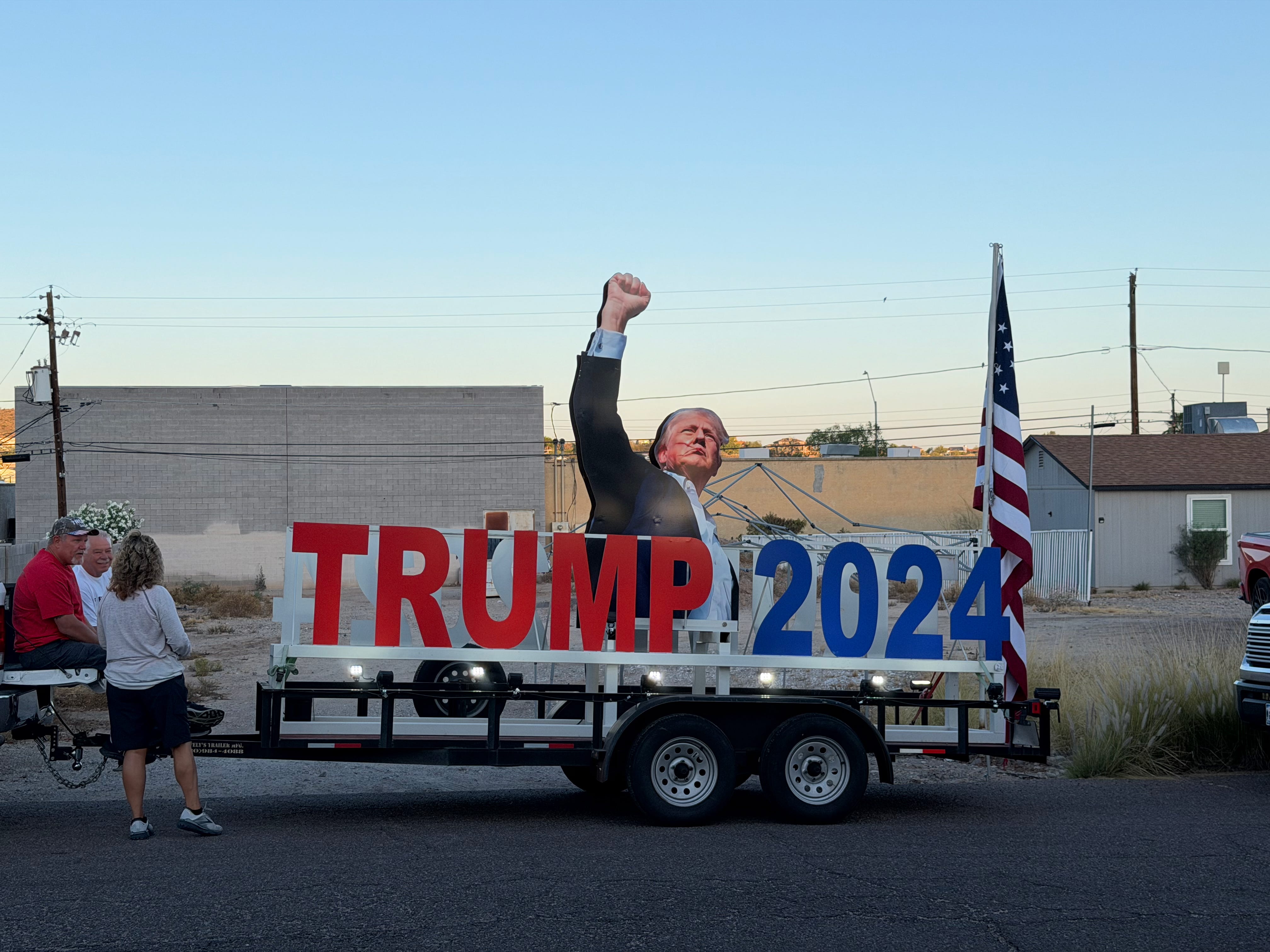
I went out of my way to be overly friendly, asking people for their names, so I could establish myself as someone they’d remember by name if I had to leave the line for any reason (such as going to the bathroom, even though there were no bathrooms anywhere in sight and no gas stations nearby).
Smiling, I shook hands, greeted people, and got to know them. Where were they from? Why were they here? Had they been to a Turning Point event before? Had they seen the president before? How would today’s schedule unfold?
As had been the case in 2024, the first thing I noticed was that everybody was really nice. They were all friendly, warm, and eager to talk.
There were people from all walks of life: men, women, teenagers, veterans, biker types—all kinds of people from all over the place. Despite what the media constantly tries to portray “Trump supporters” as, it’s quite a diverse crowd.
Where I stood in line, it ran the gamut:
A young black man with dreadlocks from Phoenix who walked over from his house a few blocks away.
A young woman from Washington state with a long skirt and long hair, who told us that if the people she knew in Washington saw her here, wearing a Trump hat, they would probably curse profanities at her and key her car.
Two aging, balding men from California who came to Arizona to “escape the insanity” years ago, who wore nice collared shirts with tiny white and gold “45” and “47” numbers on them, who had carpooled from an hour or two away.
Two Filipina women (who were extremely short) were speaking to each other in English and Tagalog. They had come to multiple events at this very church, where Charlie Kirk had spoken in the past.
A Mexican man from Texas who worked for a property management company.
And me, of course, a married white man, a business owner, and father of five kids, who drove up from Tucson.
Step 7: Be flexible and ready to change plans at any second
When I arrived to get in line, I was really glad to see that I’d gotten so close to the front of the line this time. It appeared that there was no way I was going to miss out this time, which was good, because I had driven all the way here the night before, but I still didn’t want to celebrate prematurely.
Someone who looked like a security officer of some sort said, “The line will move at 7:00.” I didn’t know what that meant, but I was watching very carefully to see and hear any further instructions. Then, all of a sudden, at 6:52 am, the line started moving, and quickly.
Where was everybody going? I had no idea, but I followed.
After a few seconds, people broke into a rush—almost a sprint—as the formerly orderly line turned into a broken, jagged crowd of people walking and running across the parking lot, headed vaguely in the direction of… somewhere?
“Where are we going?” I asked out loud.
“Just follow the crowd,” someone said.
But what if they’re going the wrong way? I wondered.
How does anybody know what’s going on?
There were no directions, no signs, no instructions, nothing—just pandemonium as bodies scrambled quickly, stepping over rocks, gravel, grass, and the sidewalk on the church campus, approaching the building.
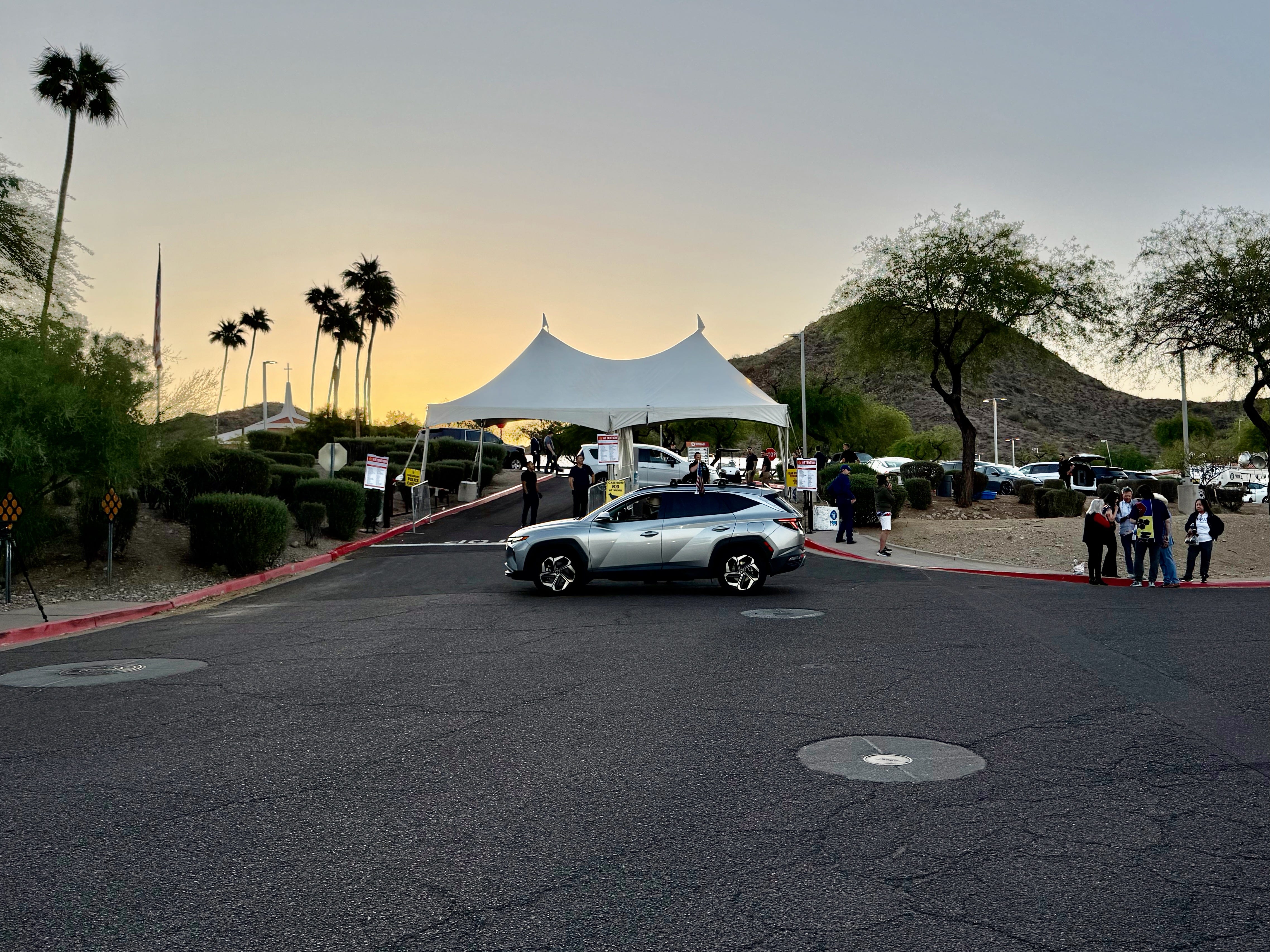
Finally, the group came to rest at a big tent that said “Turning Point,” and a line formed again. I still couldn’t see any signs or instructions, or anyone telling us where to go, so I wasn’t sure what the plan was.
After a few minutes, a woman came out of the church and said something like “Everybody, I don’t know why you’re lined up here: these are just Turning Point employees setting up a booth—this is not where the line starts. I’m sorry about that.”
Ahh! I knew it!
This wasn’t the line.
So where was it?
Everybody muttered in confusion, wondering what to do next. The crowd scattered chaotically as people tried to find out wherever on earth we were supposed to go.
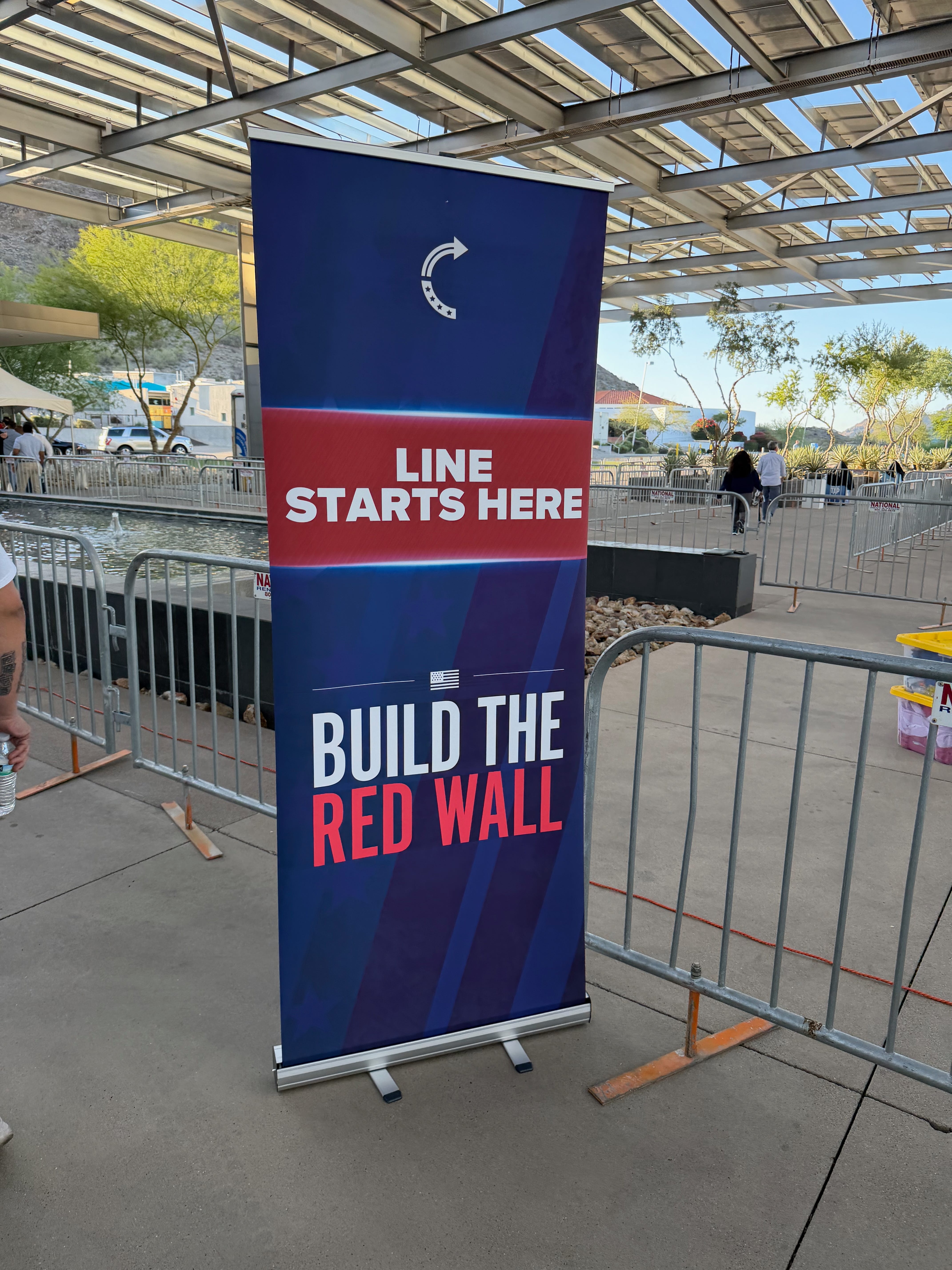
Finally, we found a sign that said “LINE STARTS HERE,” and we formed a line again.
When the Turning Point employee apologized, I wondered, “Don’t you all do this for a living? You’ve been putting on events like this for literally years. Why aren’t you better at this?”
Regardless of what had happened to this point, I was now finally in the line that mattered. The actual line. The official line.
I was where I needed to be, and that’s what mattered.
It was now 7:00. The sun was just barely beginning to rise.
The one thing that concerned me was how a Secret Service officer told us we were in the right line… but then he said “probably,” and couldn’t promise anything.
What was even stranger, he said, “But you still need to get checked in, and the people who check you aren’t even here yet.”
What?
That was a bit concerning.
Oh well. The event information said “Doors open at 9:00 am,” so we were going to have to stand there for two hours anyway. So we did.
Step 8: Find out where to stand in line, and stay put
So I stood in line, then waited, and waited, and waited. A few things I discovered at this point were helpful, but I wished I’d known them sooner.
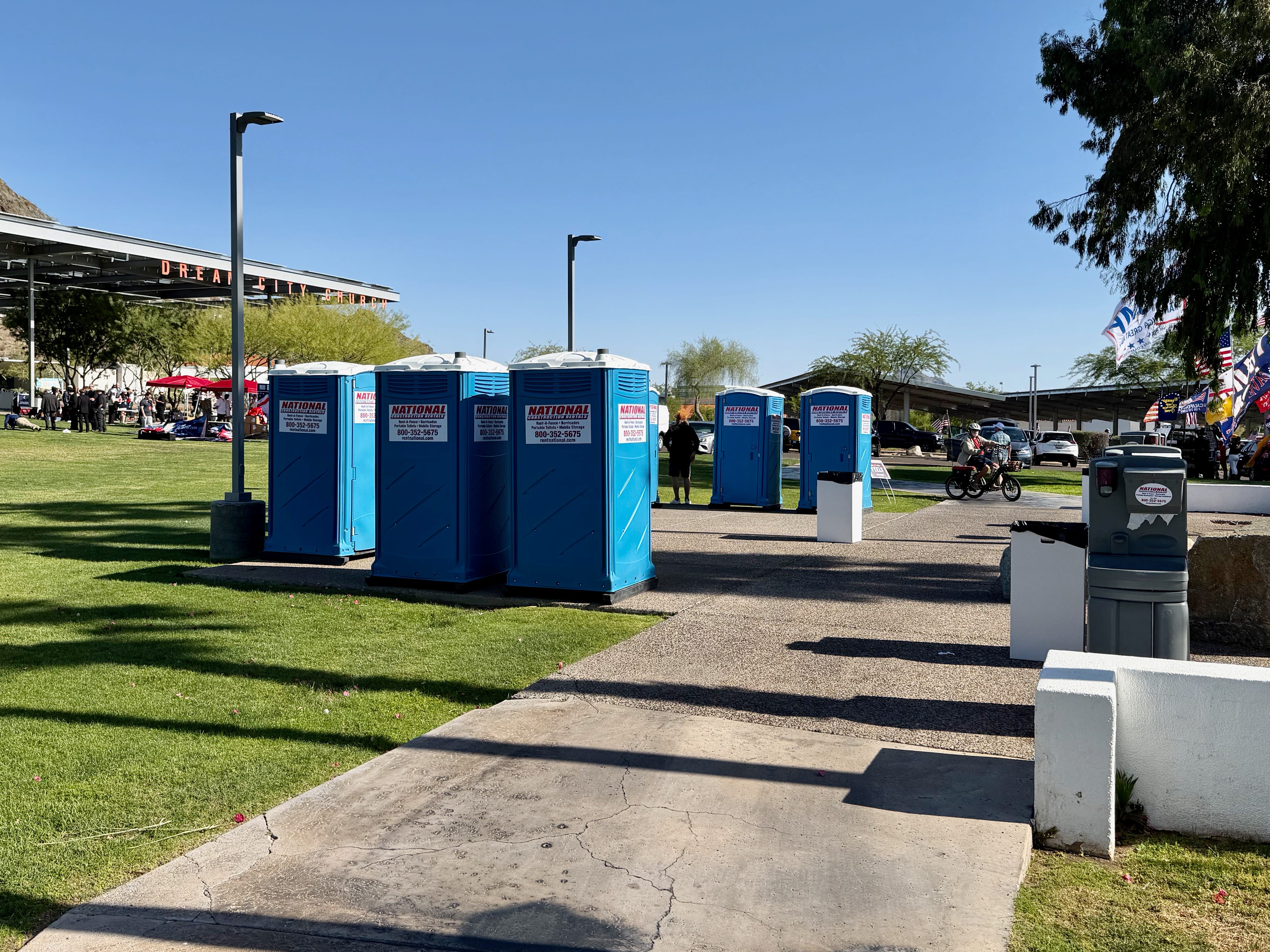
First, there were water stations.
The email I got the night before mentioned this, but it wasn’t very specific, and it didn’t specify whether they would be before or after the Secret Service security screening. So while I’d brought a water bottle I could drink from and throw away, I now knew I could refill it if I needed to.
Second, there were bathrooms.
Boy, oh boy, I wish I had known this earlier! A whole collection of porta-potties was installed on the church campus, a short way away from where the line was. They even had hand-washing stations nearby.
Why couldn’t they have told us this before?!
I had really hoped they would do this, but I planned my whole morning based on the assumption that there would not be bathrooms just to be safe. Now it turned out I actually could go to the bathroom if I needed to. I actually could have had coffee that morning after all.
That was frustrating. But I would rather have learned it this way (not expecting bathrooms and water and being pleasantly surprised when they were there) rather than the opposite (planning on having them and finding out they were not there).
Third, there was shade!
This was a huge relief—as I mentioned, in 2024, I had gotten dehydrated and turned pink from standing in the noontime heat and sun for just two hours, and never even got in. This time, I didn’t want that to happen, so I had put sunscreen on earlier in the morning and wore a hat to keep the sun off of me… only to find out that I didn’t really need it.
The church had these giant solar panels above the concrete walkway where we were standing in line that gave significant overhead cover from the sun.
Once again, this was a good outcome: better to come prepared for not having cover than finding out we had some rather than the reverse.
I ate both my Rx Bars while standing in line, which made a good breakfast. But now my teeth were covered in stickiness, and they had melted in my pocket, making a mess.
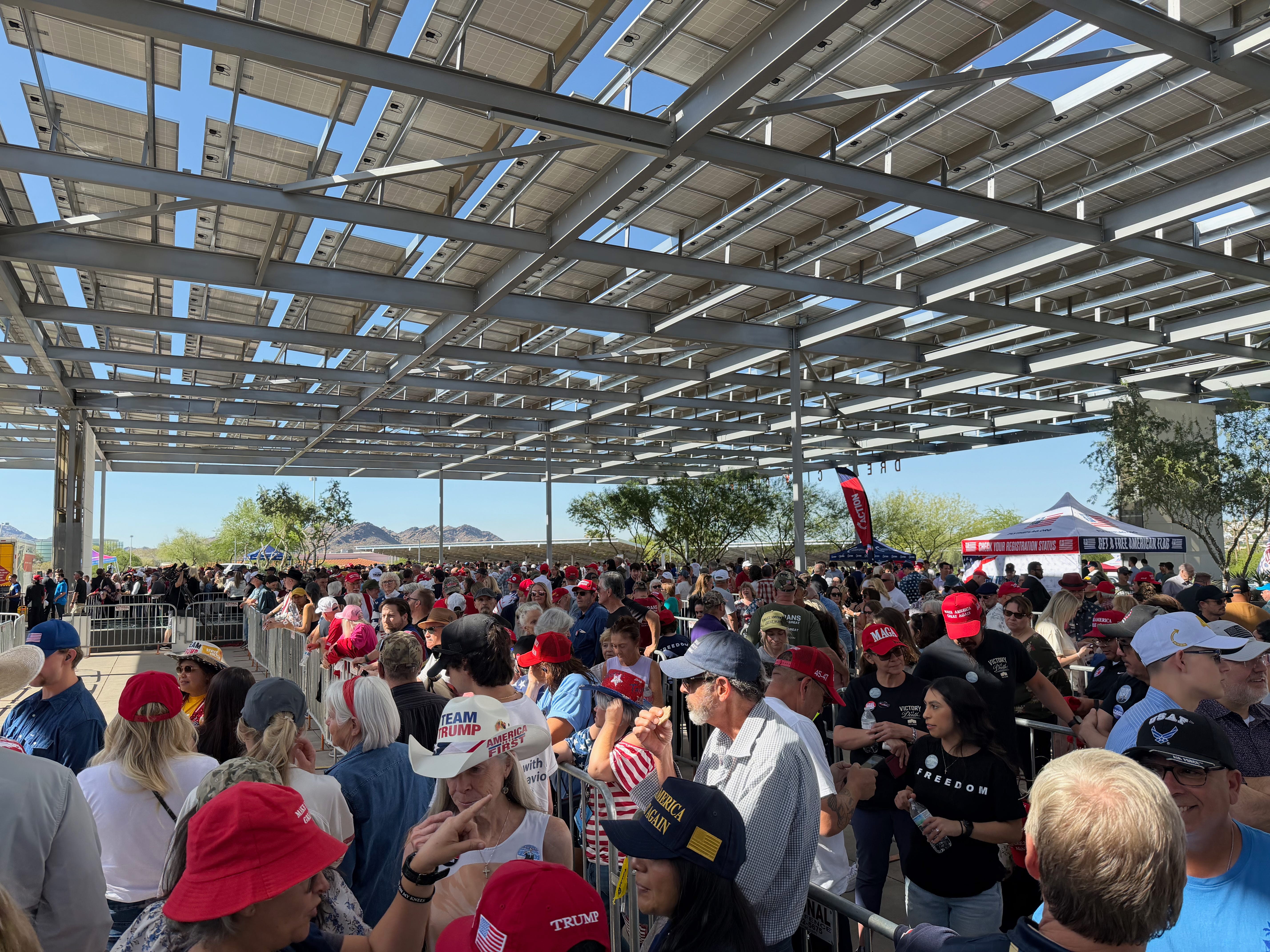
As we waited, people passed out free buttons and stickers for various candidates running for office in 2026:
Andy Biggs for Arizona Governor
Steve Hilton for California Governor
Mark Lamb for Congress
and more
Other people sold merch: stickers, pins, hats, etc.
Some political campaign operatives came and hyped up the crowd from time to time with various chants:
USA! USA! USA!
Charlie! Charlie! Charlie!
Build the Wall! Build the Wall! Build the Wall!
“When I say ‘red,’ you say ‘wall!’ ‘Red!’ ‘Wall!’ ‘Red’ ‘Wall!’”
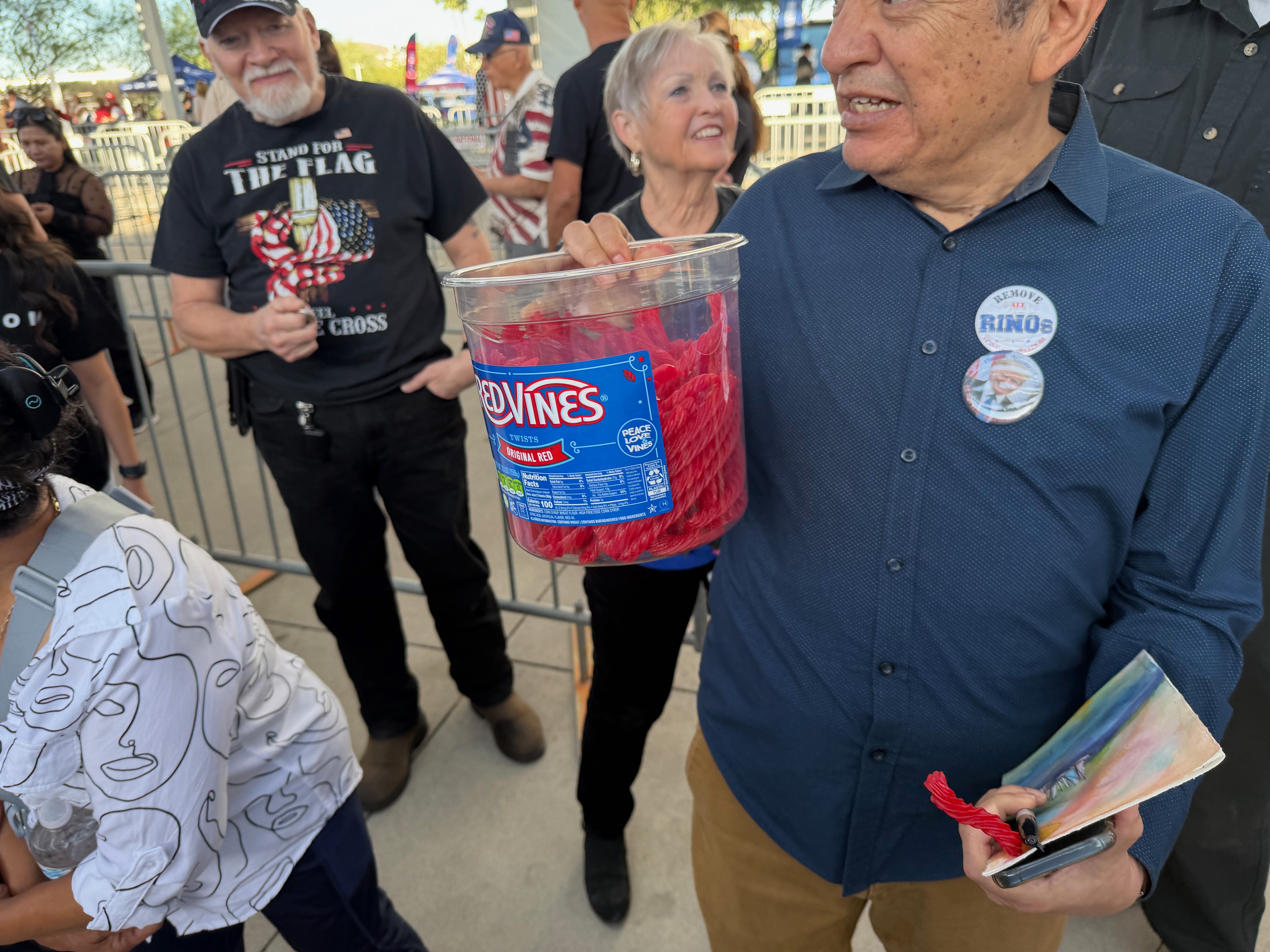
I looked around at all the various clothing people wore, and it was truly a sight to behold: there were all kinds of shirts, banners, hats, pins, signs, costumes, and embroidery of every imaginable color and material.
Most were emblazoned with bible verses, Trump pictures, and quotes, and images of Charlie Kirk. There were Dog tags. Vests. Camouflage. Denim. Sequins. Rhinestones. Cowboy hats. Suits. Ties. Trucker hats. One man dressed up like Abraham Lincoln.
The messaging was all over the place:
Veterans for Trump
Trump Was Right About Everything
Trump 2028
Team Trump
America First
Stand for the Flag; Kneel for the Cross
Gulf of America
Freedom
People passed around buckets of red licorice to share with everyone. It was kind of like one big, happy family. Everyone was nice, chatty, and in a good mood.
As we waited, news crews came and went, taking pictures, getting video footage, and interviewing random people about their thoughts. A few times, I heard some specific questions that really got me thinking.
Two questions I overheard really stood out to me:
What are some things President Trump has done that you like?
What do you expect the President to say today?
I turned my back to the cameras as much as I possibly could, mostly because I didn’t want to be in the news, but also because I couldn’t actually answer these in such a rapid-fire, sound-bitey type fashion.
I hate questions like this. Not because they’re stupid questions—they aren’t—but I don’t like them because if you can’t answer them quickly, on camera, with zero preparation, you look like an idiot.
If I had been given a mic and stood in front of a camera, I would have sputtered and stumbled with confusion. I would have had no idea what to say.
For weeks, I had been so focused on just getting here that I hadn’t even thought about anything else beyond that. So I quietly pondered all this as I stood in line.
Hmm… What are some things President Trump has done that I like? What am I hoping he will say today?
I wasn’t going to answer questions on camera, but I did think about it for myself.
If I couldn’t come up with a list like this, why was I even here?
I started making a bulleted list of specific, concrete things Trump has done since he was first elected in 2016 that I approved of or appreciated.
As I waited, over the next two hours, I started adding lines to my list. It was harder than I expected, even though it was such a remarkably simple request.
You’d think it would be extremely easy to answer for someone who had driven two hours the night before, rented a room, woken up at 4:00 am, and put so much thought and effort into going to an event like this.
I wouldn’t put forth all that effort for no reason, right?
Right?
At 9:18 am, after more than two hours standing on the hard pavement in the hot sun, we were FINALLY allowed to go through the Secret Service security and into the building.


And, once again, things got really weird.
Earlier, we were told that we could not bring water bottles into the event. Now, we were told we could bring in our water bottles… but only if they were see-through.
When it was all said and done, it was chaos: some Secret Service agents told some of us that we had to throw out our water bottles, even though they were clear. Others made it through the security screening—with their water bottles—without issue.
I don’t understand any of this, and it makes no sense why the Secret Service and/or the venue security can’t answer such a simple question like this.
Step 9: Get inside and claim your seat, quickly
As soon as I got into the building, I tried to figure out where to sit. Turning Point was offering free hats to the first 1,000 people, so I got one, which was cool. It was kind of awkward, though, since most people attending were already wearing hats and/or had purchased hats from the merch vendors while in line, so now lots of people had two hats, which was awkward. Most people wore one and carried one, but some people put on both at the same time.
Once again, there were no instructions or directions at all, and it was kind of a free-for-all in the building. I tried to find and claim a seat as fast as I could (without rushing or running).
My goal in getting to this event early was, of course, to get into the building. But it was also to arrive early enough to get a good seat, however you’d define that.
The day before, I tried to find a map of the church’s seating layout and see if I could identify the best place to sit. I found a section I would try to get to once I entered the building. And here’s where the facts of life burst my naive bubble.
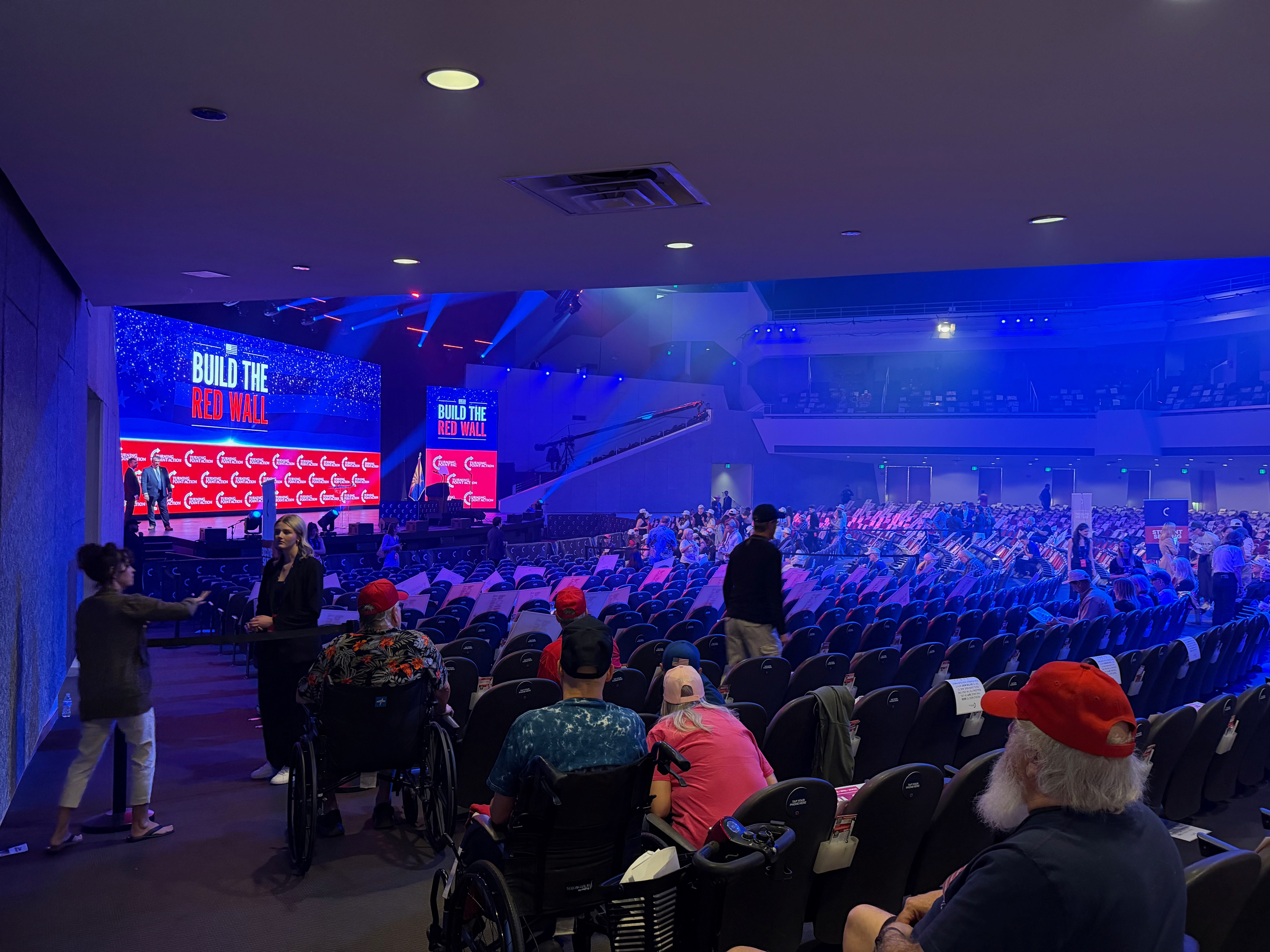
The event info said it was “first-come, first-served.” But it was not, in fact, “first-come, first-served” when it came to seating.
In fact, no matter what time I had arrived, it turned out that the entire ground-floor—where I had planned on getting a seat—was off-limits.
The whole main level was reserved for “VIP Access Only.”
What is VIP? Who are the VIPs? How can I become a VIP?
None of that mattered because I didn’t really care, and I didn’t want to be, and at any rate, I was not a VIP.
This was very annoying: they never told us this at any point in time. Nothing in any of the communication said anything about VIPs.
So, to say seating was first-come, first-served was a lie, plain and simple.
Fine, it’s not that big a deal, but it meant that I had to walk up a flight of stairs to go to the second floor.
Why don’t they tell people about this?
I hate that event organizers are so bad at setting expectations.
I wish they had just said we could show up at 2:00 am and pitch a tent in order to be the first person there, and it still wouldn’t matter because the whole main level was roped off anyway.
But they didn’t. They didn’t say anything about that.
That’s annoying.
Anyway, I finally made it up the stairs and looked around for a good seat with a view, but was momentarily confused—most of the seats had these big papers on them with words. In the darkness, I couldn’t read the words, but I assumed that they were some sort of sign saying “This seat is reserved.”
Where was I going to sit?! What was going on?
After a few moments, I tried to calm down, reassess the situation, and figure out where to go from there.
I walked up the stairs, then found a section that looked good, but it was very confusing: all of the seats, it seemed, had “reserved” signs on them. I keep looking for seats that weren’t reserved, but I didn’t see any.
Now I was really confused. Was this whole section taken, too?
What was going on?
Finally, I picked up one of the signs and tried to read it in the dark.
I now realized it wasn’t reserving seats: it was one of several different signs that had Charlie Kirk quotes on it, and said things like “Build the Red Wall,” and “Biggs for Governor.”
Ahhh, now I get it… these were signs for us to hold and wave during the event.
Okay, no big deal. I found a seat, grabbed a sign, and sat down.
Finally, I made it.
My goodness, what an ordeal this had been.
I had driven over two hours the day before to get here, rented a room the night before, went to bed early, woke up at 4:00 am, checked out of my room, made my way over to the church at 6:00 am, stood in line for three hours and fifteen minutes, and found my way to a seat I could call my own… without anyone else’s help thank you very much.
So, it was now 9:30 am, and I was seated in the venue, cooling down in the nice, air-conditioned building.
But the event didn’t start until noon.
I now had 2.5 hours to wait before anything interesting happened.
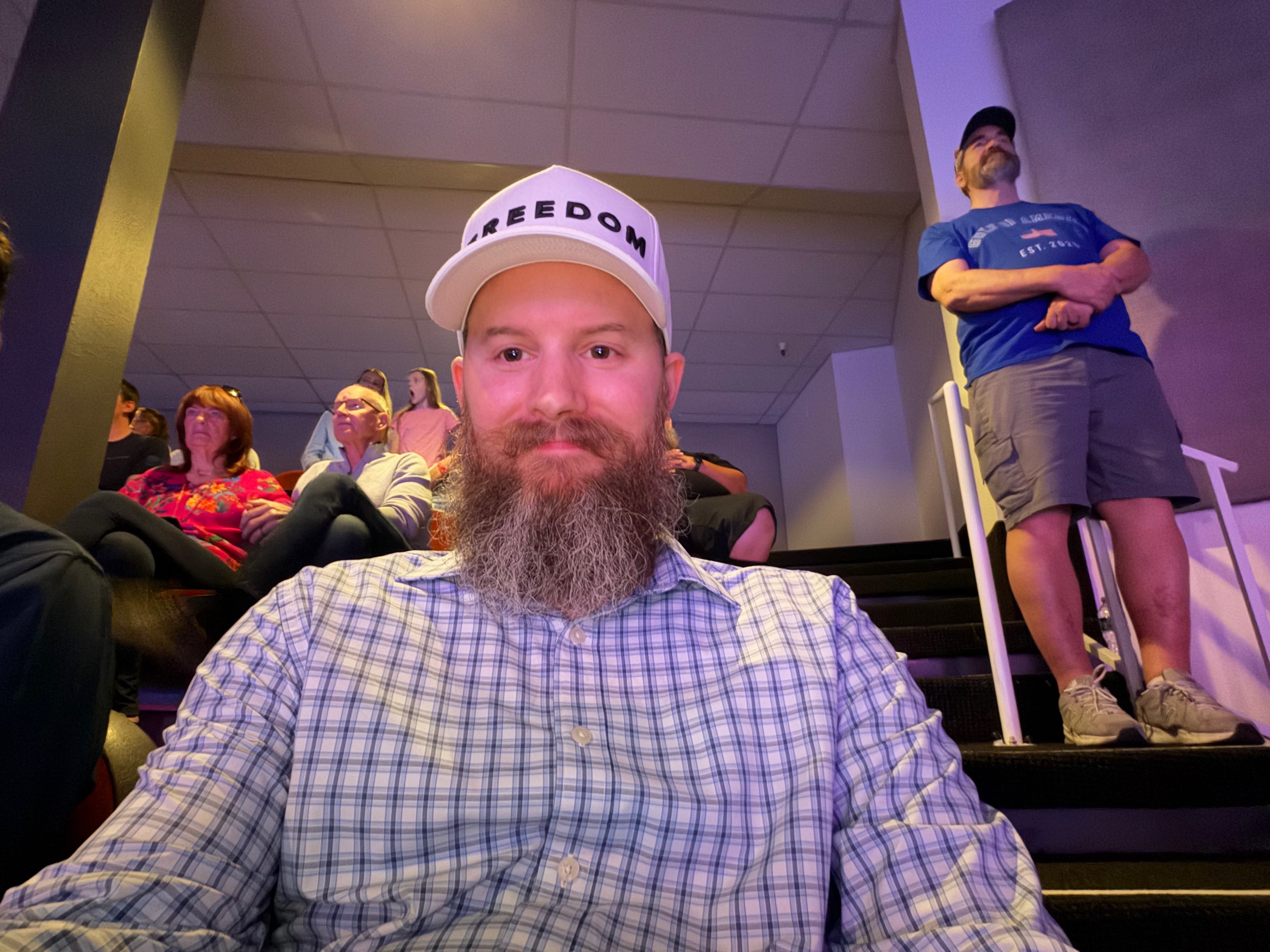
I went to the bathroom, washed my hands, brushed my teeth, and went back to my seat, feeling like a brand new person except for the fact that I was still very hot from the whole ordeal, and my t-shirt was totally soaked through the armpits.
Step 10: Relax, you’ve made it
I went downstairs and bought some coffee, bought the book Charlie Kirk had just finished before he was assassinated, then went back upstairs.
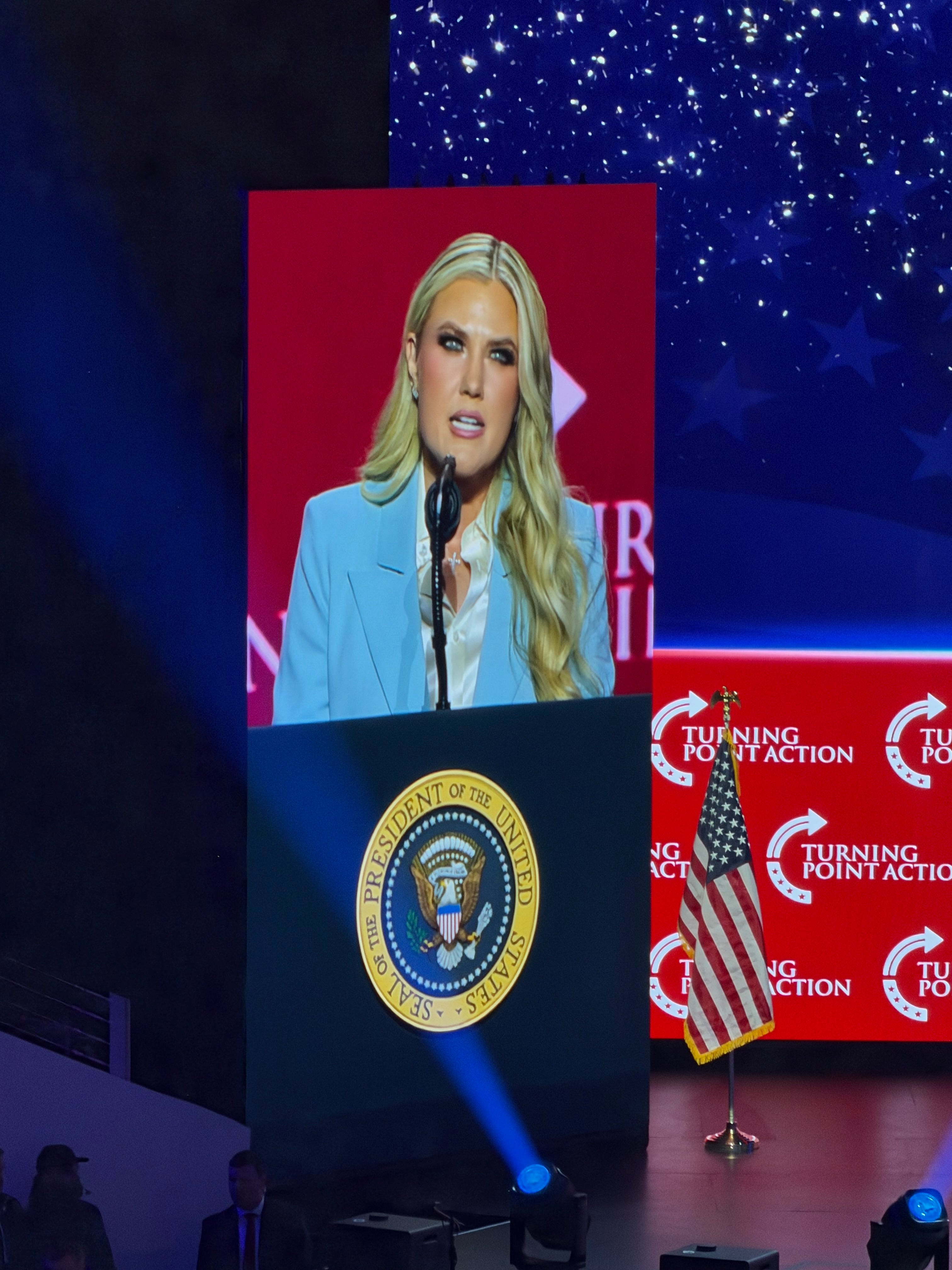
After waiting for an interminably long time, the event finally began. I’ll spare all the boring details, but here are some of the notable people who came to the stage to speak.
Tommy Barnett (former pastor)
Danica Patrick (former professional racing driver)
Jay Feely, former NFL kicker (and congressional candidate)
Mark Lamb, Pinal County Sheriff (and congressional candidate)
Congressman Juan Ciscomani, AZ-06 (My current U.S. representative)
Congressman Paul Gosar, AZ-09 (My former U.S. representative)
Congressman Abe Hamedeh, AZ-08
Congressman Eli Crane, AZ-02
Congressman Andy Biggs, AZ-05
Kathryn Limbaugh (Rush Limbaugh’s wife)
Erika Kirk, President & CEO of Turning Point USA (Charlie Kirk’s wife)
Donald Trump, President of the United States of America
By the time Trump finally took the stage at 2:54 pm, I had been there for almost nine hours. He spoke for about 45 minutes on all manner of topics, as he always does.
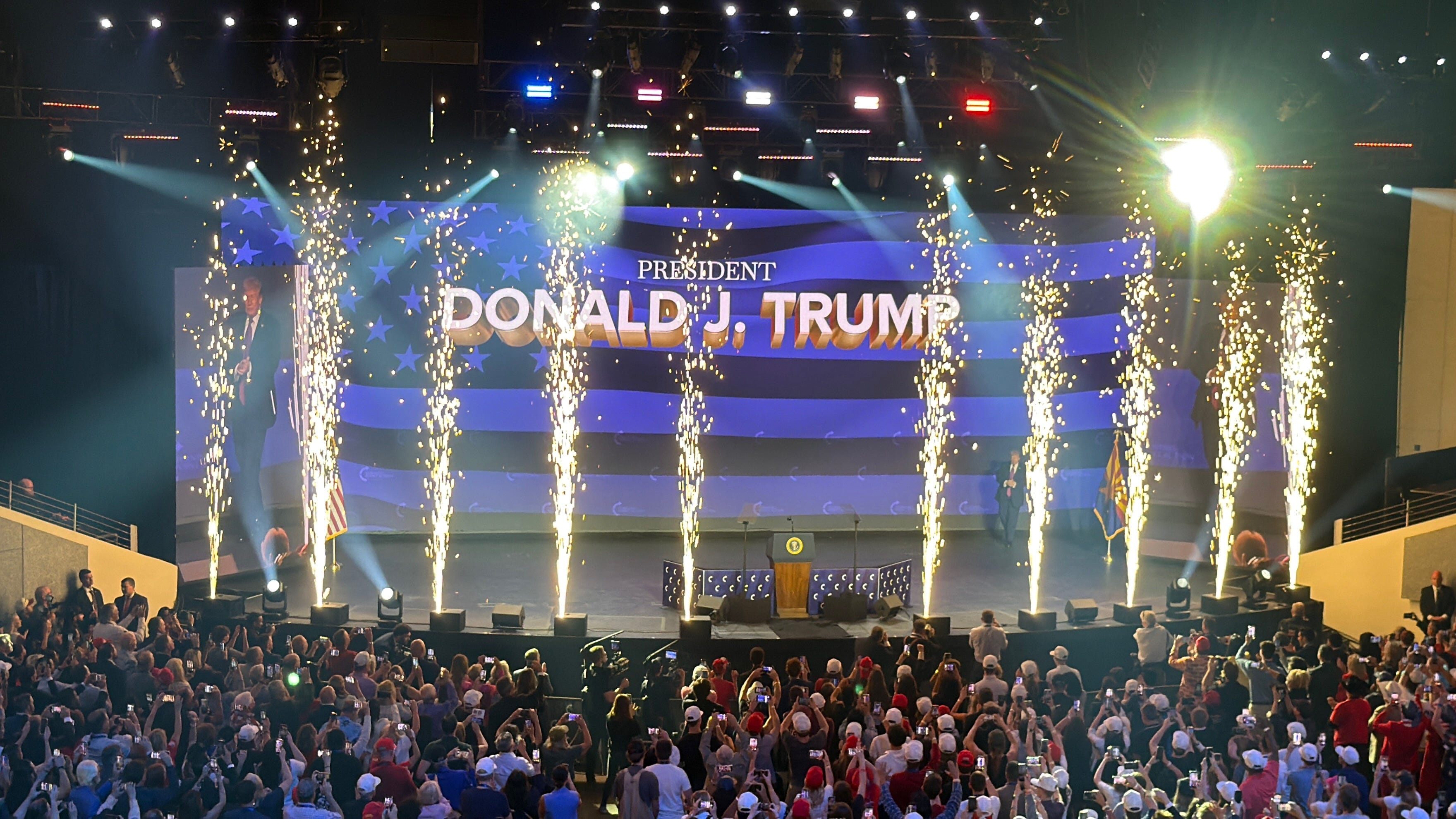
I had been taking notes throughout the day, adding lines to a bulleted list of things I appreciate that Trump has done throughout his presidency (or presidencies, as the case may be). After he was done speaking, I looked at my iPhone and noticed that my list was now complete.
By now, I had a bulleted list of 17 specific, concrete actions he has taken as president that I am grateful for and fully support. There are probably more, but I didn’t need to write them all down.
There are also many things I don’t appreciate about President Trump and what he’s done. But I didn’t need to make a list about those. There are an infinite number of articles about that by everyone else on the internet.
Like all politicians, Trump is a mixed bag. But regardless of what people think about him, he’s the President of the United States, just like all the other presidents we’ve had, and he holds the highest elected office in the land and is the commander-in-chief of our armed forces.
I think, though, in the end, there are three things I appreciate about President Trump more than anything else, and I’ll always appreciate these, no matter my differences of opinion on the issues of the day.
First, that he is truly a product of America.
Everything about him is American: his whole story is American as it gets. And he is always, always talking about American greatness.
Second, that he never apologizes for America.
Most politicians (especially Democratic presidential candidates in 2000 and onward) spend their entire political campaigns talking about how bad they think America is.
I always disagree with their assessment, but even if I did agree that parts of America were bad—or that America, in general, was bad—it does make you wonder, “if America is so bad, why do you want to be president of it?”
Many, many politicians, on their way to office, and even while in office, apologize to the rest of the world as often as they can for America, for Americans, and for American-ness. It’s like they feel their duty as Americans, representing Americans, and speaking on behalf of America, is to tell everyone, “We’re just awful, aren’t we?”
Trump never does that. I really appreciate that.
I will never apologize for being an American, either. He and I have that in common.
Third, he’s a businessman.
It always bothered me that, for some reason, American presidents have always been “war heroes” or career politicians who view the presidency as the ultimate prize to be attained when they finally climb the political ladder to the very top.
Why on earth, until Trump came along, had no president been simply a taxi driver, or college professor, or barber, or someone like that? Why had there always been two unofficial qualifications for being president: that you had to have served in the military, or you had to have been a career politician, and ideally, both?
These are outrageous, arbitrary, and functionally useless as a measure for the fitness of holding the office of executive. This has made for some very, very bad presidents.
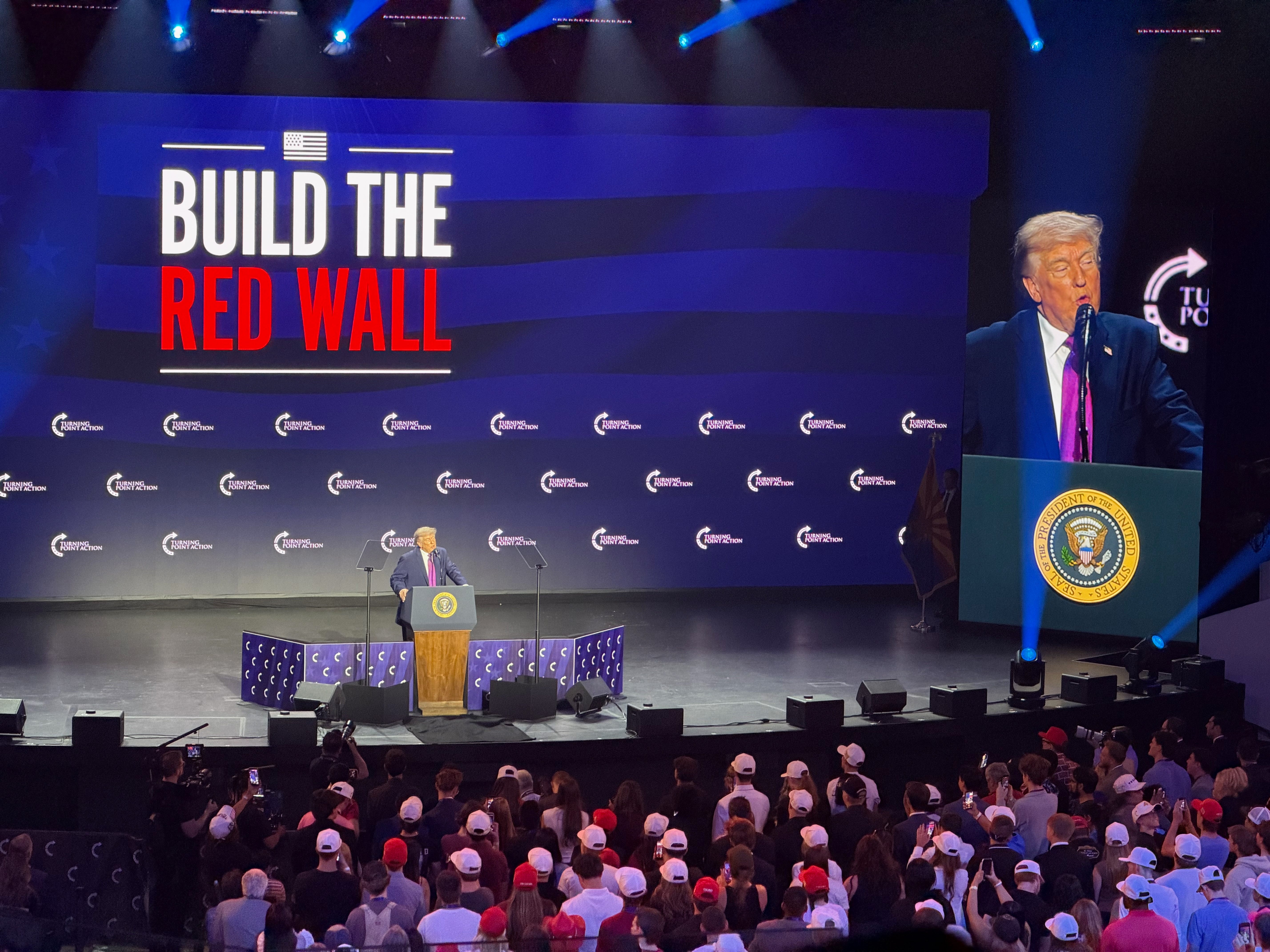
Say what you will of Trump as president—I really appreciate that he knows how businesses actually work and understands things like profit and loss statements, taking big risks, hiring people, and firing them.
I am a businessman. I have never held elected office. I have also never served in the military. People in America very often like to talk about “representation” in a sort of metaphorical sense: that you can’t really belong in a place unless you can see people in positions of power who are like you, act like you, or look like you.
I have never bought into this, and I don’t support this idea in general. But I will say this: it does indeed feel good to finally see someone like me ascending to the presidency.
I’m glad that Trump has smashed through that ridiculous barrier and shown that anybody—yes, even I—can become president as long as you are a natural born citizen and at least 35 years old (which are the only written rules for becoming president).
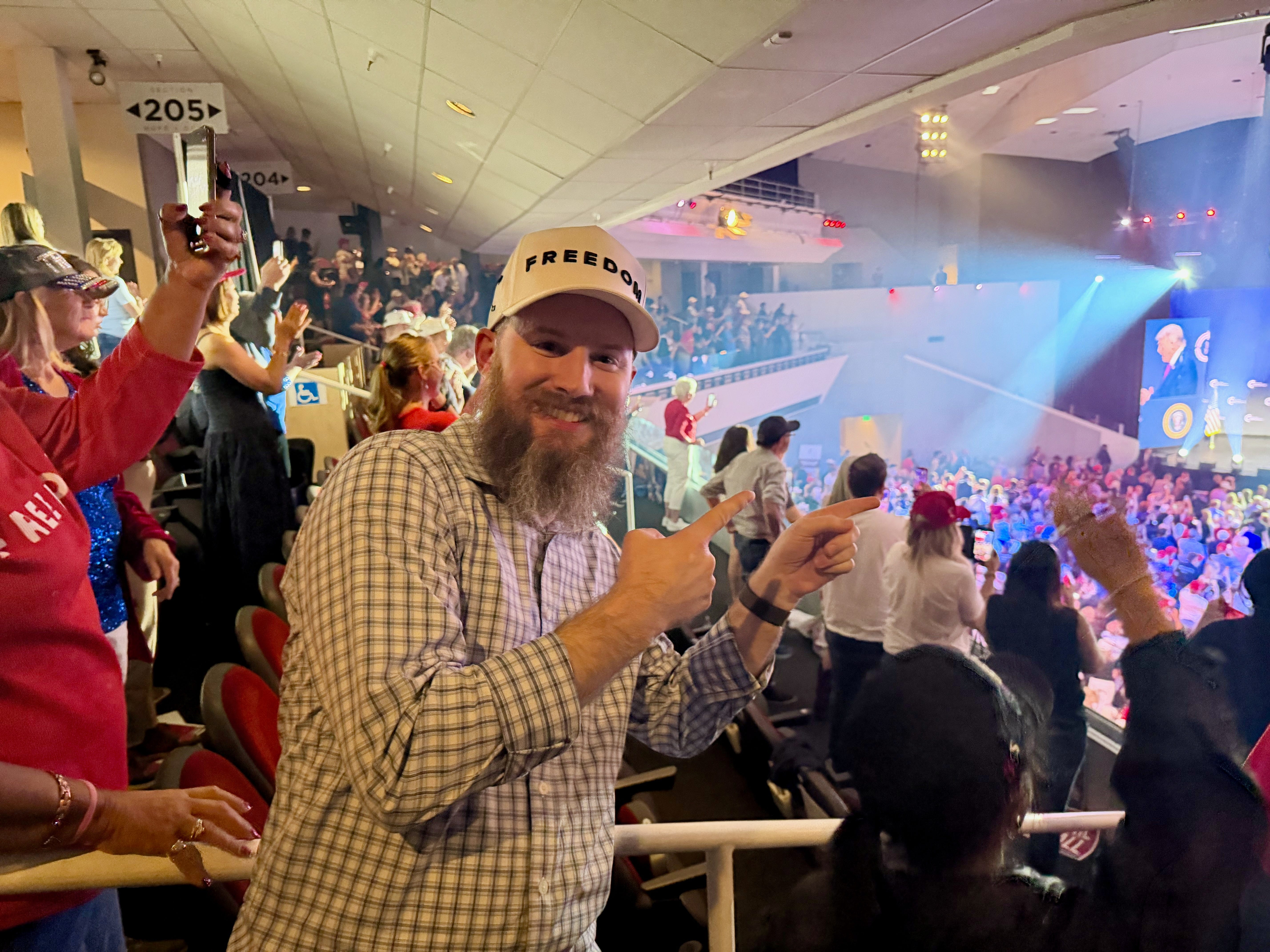
At 4:00, the event was over. I got what I came for. I saw the President of the United States of America, in person, for the first time ever.
And I got the answer to my two questions: I now have a list of things I appreciate that President Trump has done, and I know what I was expecting him to say—pretty much everything he did say.
I met some nice folks, participated in the American political process, and ensured my voter registration was active and valid. Then I headed back outside in the sunshine, walking past the protesters who were holding bullhorns and screaming “FUCK YOU, MOTHERFUCKER” directly at people like me, and went back to my Airbnb.
I got in my car and drove home. Once again, right through downtown Phoenix, this time through rush-hour traffic at 5:00 on a Friday.
If you’ve ever thought about going to something like this, I hope this gives you a clearer picture of what it’s actually like. It was a lot of work, but it was worth it.
I loved reading this, and I am so glad you ended up having a good time.
Regarding this, "When it was all said and done, it was chaos: some Secret Service agents told some of us that we had to throw out our water bottles, even though they were clear. Others made it through the security screening—with their water bottles—without issue.
I don’t understand any of this, and it makes no sense why the Secret Service and/or the venue security can’t answer such a simple question like this."
I have run big events w/ POTUS and VPOTUS and, unfortunately, SS can change the rule any...time...they...like, and the events team has 0 control. I will take it at face value it is for security, but it seems like rank disorganization at times.
I do wish event/conference teams would communicate more clearly, when possible, about things like heat, water, bathrooms--- its no joke.
God I will never forget 3am prepping for POTUS.